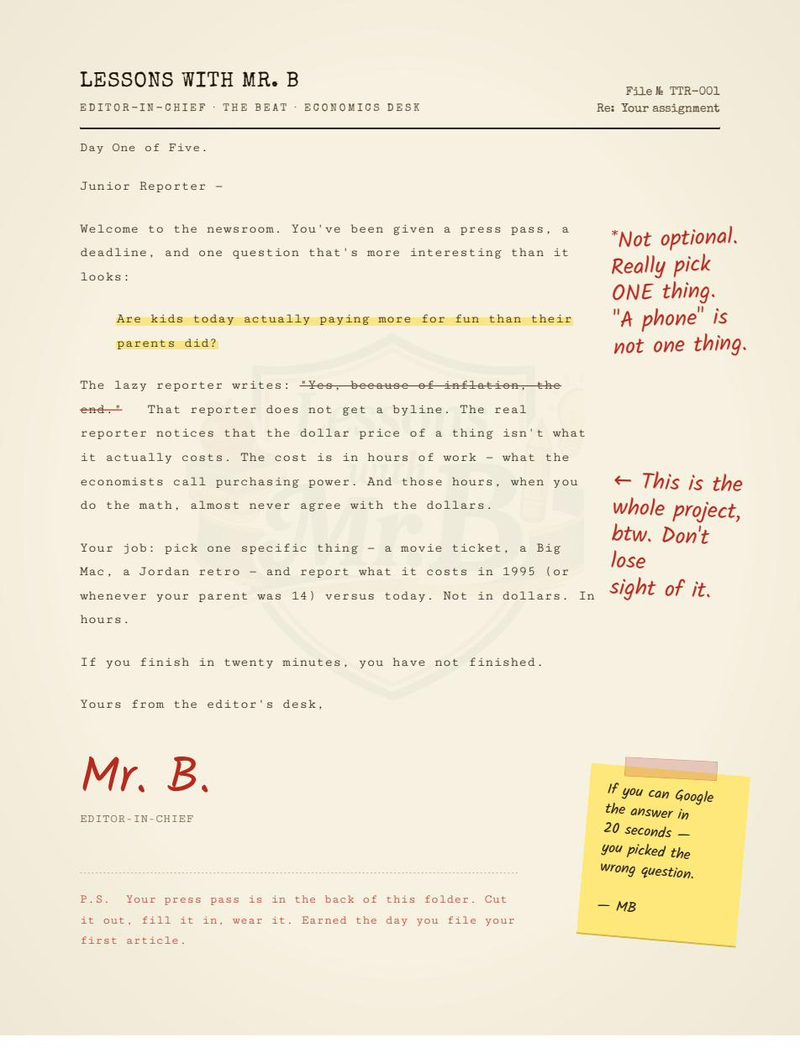
A 1995 movie ticket beside a 2026 movie ticket. A press credential. The student is the junior reporter, the question is whether prices outran wages or the other way around, and the assignment is a real 500 to 700 word feature article.
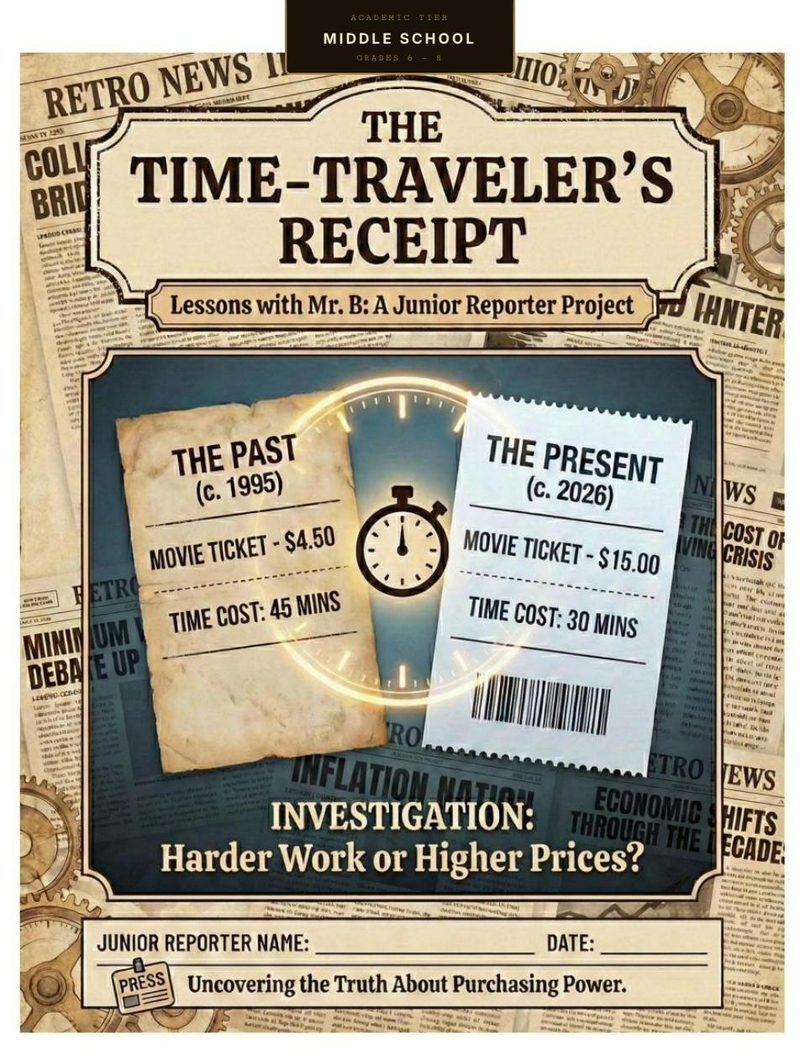
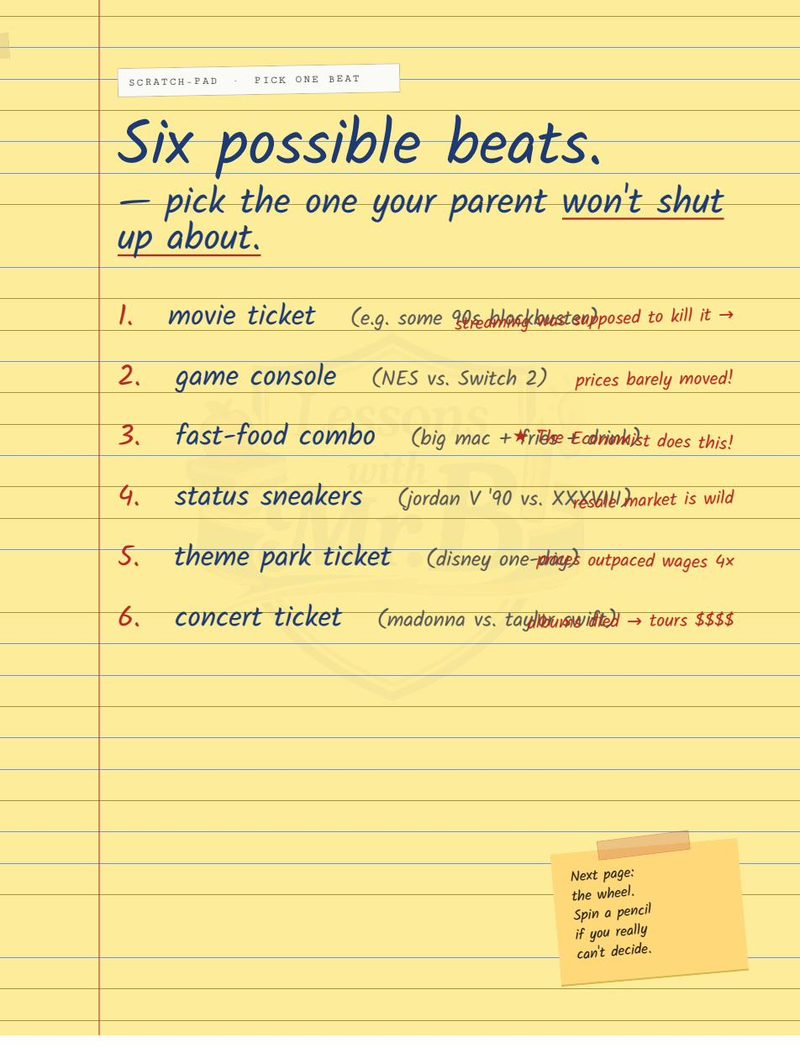
The student opens the kit and finds a press credential with their name on it, a typed letter from Mr. B, and a yellow legal pad with six "beats" on it. Movie tickets. Game consoles. Fast-food combos. Status sneakers. Theme park tickets. Concert tickets. They pick the one they care about and start working.
The job: find a historical price and a historical hourly wage, find the same two numbers for today, and run the math. Price ÷ wage = hours of work to afford it. Mr. B calls that the Sweat Score. The student calculates it for both years, interviews two adults about their first jobs, gathers two cited sources, and files a 500 to 700 word feature article with a lede, a nut graph, body with attribution, and a kicker.
The deliverable is a piece of journalism, not a worksheet. The student gets a press pass for the trouble and a polished article for the wall.
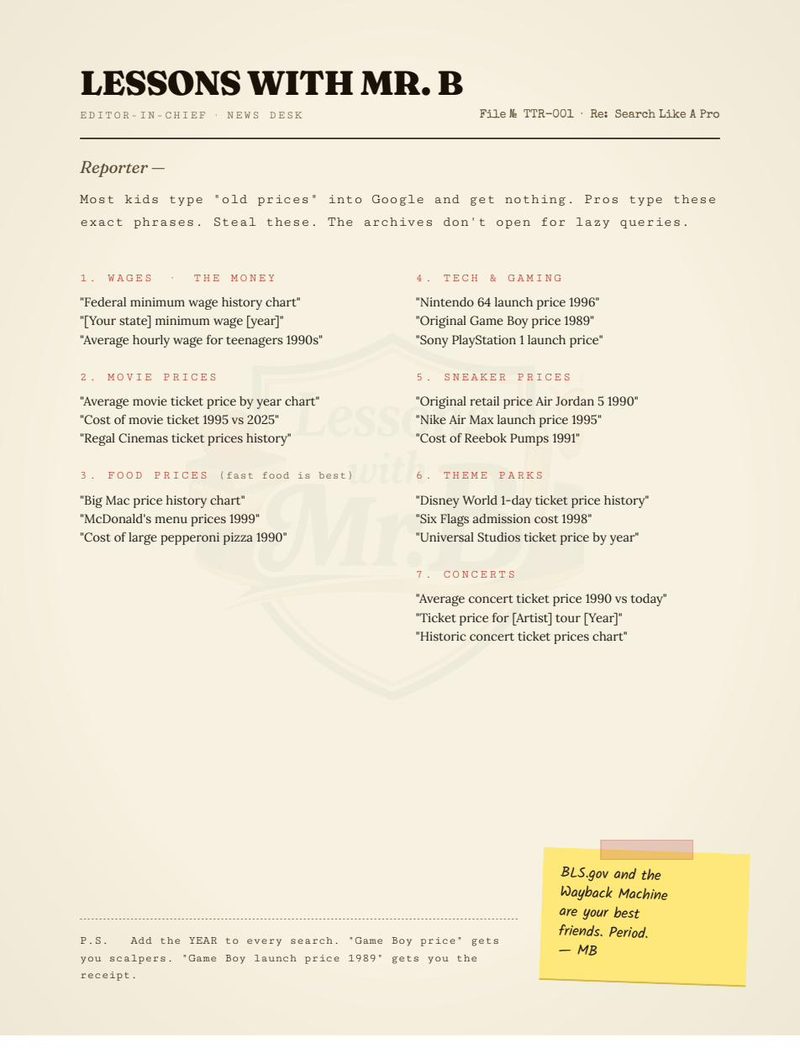
Add the year to every search. "Game Boy price" gets you scalpers. "Game Boy launch price 1989" gets you the receipt. From the field guide · Mr. B.
By the end, the student has practiced what working journalists do for a living: they've sourced numbers, interviewed witnesses, structured an article, and turned a pile of evidence into a story another human will actually want to read.
Inside the kit, on a yellow legal pad, are the six options below. The student picks the one their parent won't shut up about, then runs the math on what it cost in working hours then versus now. Same skills, different beat.
A 1990s blockbuster compared to a present-day release. Streaming was supposed to kill the box office, and the price tells the actual story.
NES vs. Switch 2. The street price hasn't really moved in thirty years, but the wages buying it have. The investigator runs the ratio.
Big Mac, fries, drink. The Economist tracks this one for a reason. The student does the same kind of work on their own block.
Jordan V from 1990 next to a current Jordan retail price. Then the resale market on top, which is its own story entirely.
A Disney one-day pass, then versus now. Ticket prices have outpaced wages by a factor of four, and this is the article that explains how.
Madonna's Blond Ambition tour vs. Taylor Swift's Eras tour. Recorded music died, touring became the money, and the ticket price followed.
Twenty-four pages run through the project end to end. The twelve below cover the cover, the welcome with B7 access policy, the instructor brief, the Day One letter from Mr. B, the six-beats menu, the Detective Work pie chart, the search-tips reference, the pre-file checklists, the Five Rules of the Beat field guide, the Junior Reporter's Notebook, and the back cover.
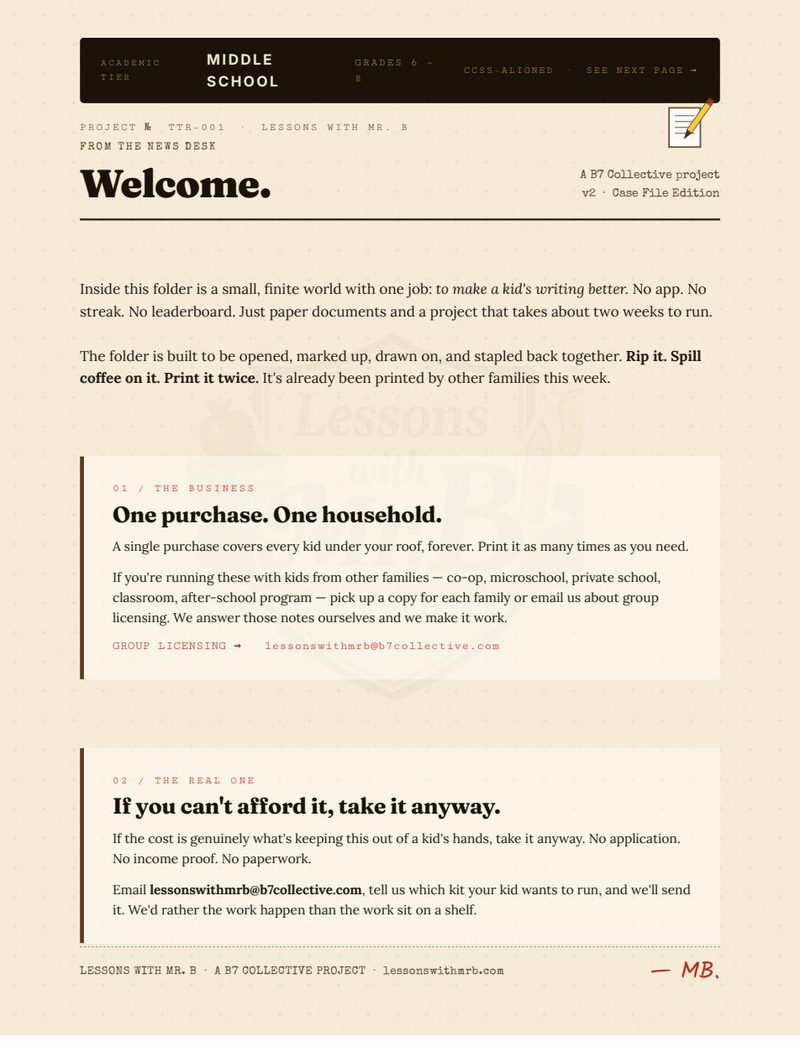
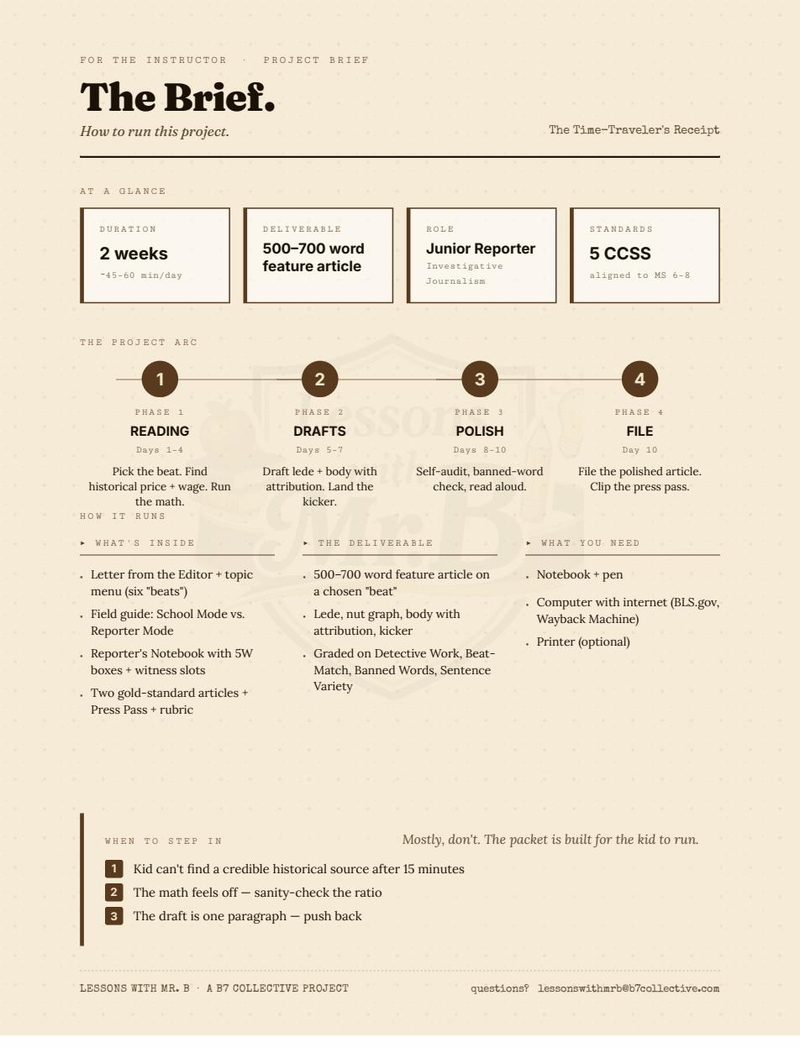
Cover, welcome, and the standards brief. Before drafting begins, the kit tells the student who they are, what they're being asked to do, and what good looks like. The parent or instructor can read it in five minutes.
The kit inventory, the typed letter from Mr. B, and the yellow-pad menu of six possible beats. The student picks the one their parent won't shut up about and starts working.
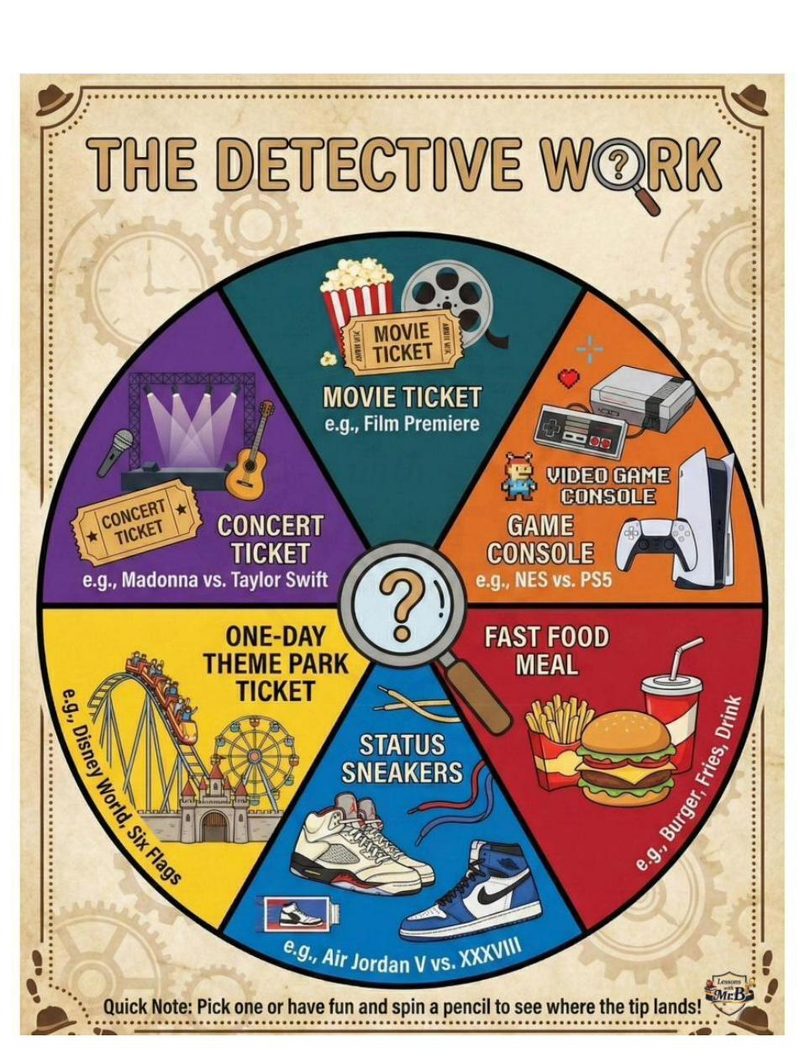
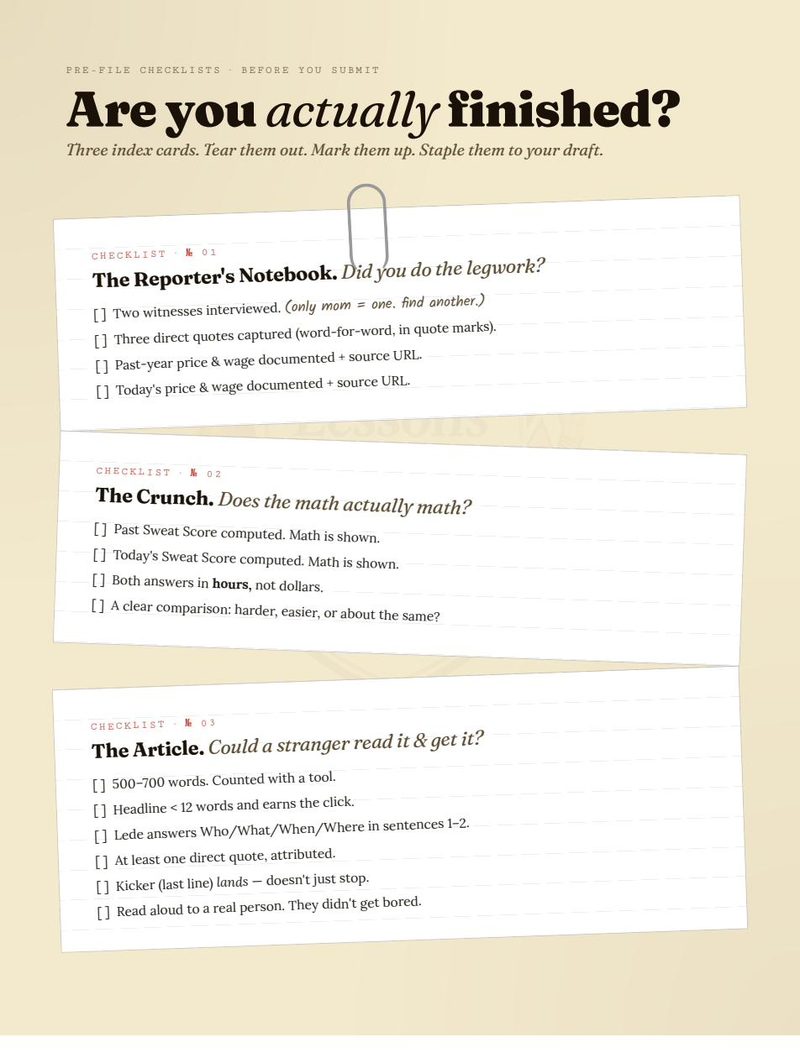
The Detective Work pie chart, the search-tips reference for hunting down historical prices and wages, and the pre-file checklists the student staples to their draft before turning it in. Real working tools, not worksheets.
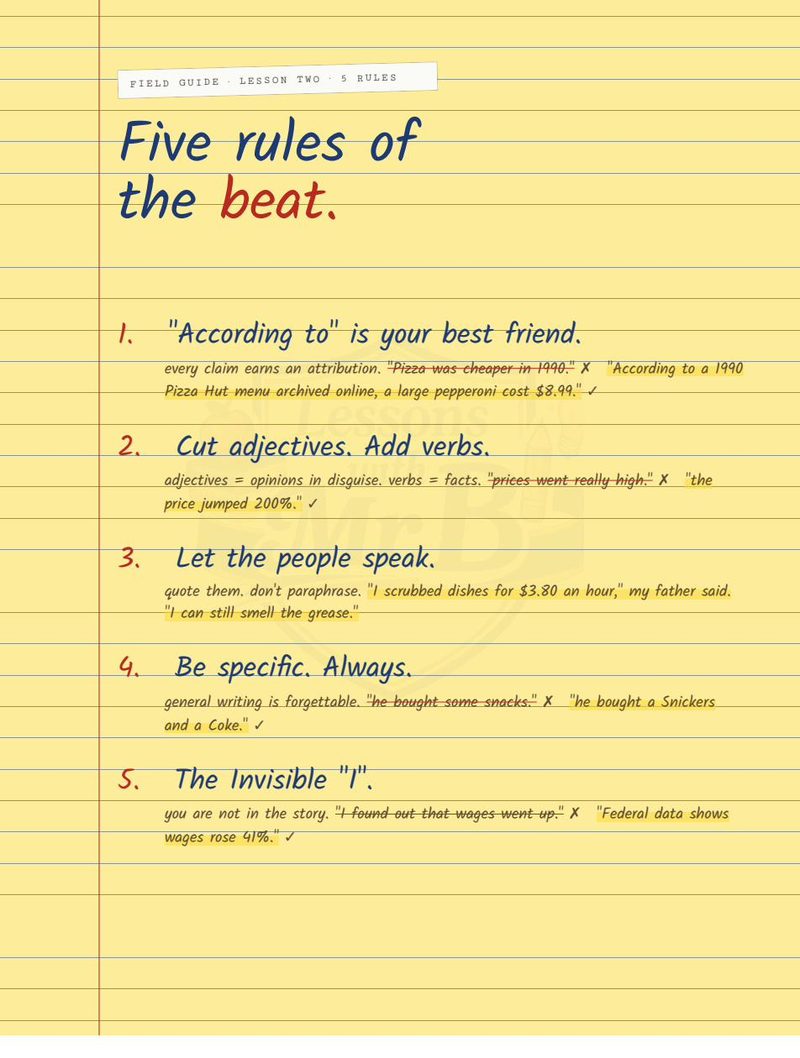
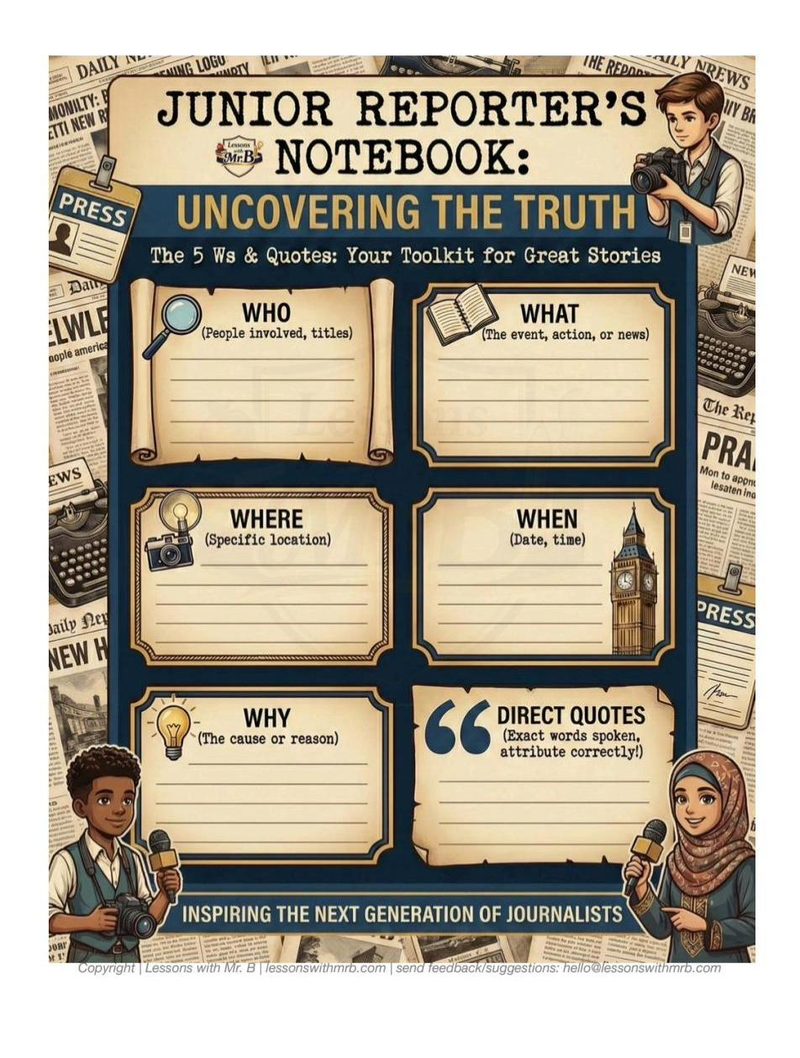
The Five Rules of the Beat (the field guide that does most of the writing instruction), the Junior Reporter's Notebook with 5W boxes, and the back cover that closes the file.
The voice in this kit is Mr. B: direct, fair, never condescending. He has clear, specific expectations for what makes writing good, and he tells the student what they are. The parent or instructor uses the included rubric to grade. Mr. B's job is to guide the student through the work.
He bans the word "very." Insists on the year. Wants active verbs. The standard is steady and explicit, which is what makes it useful for a kid trying to figure out what good looks like.
Don't tell me the crown is scary. Show me the queen sweating.
Active verbs and the year. If neither is on the page, neither is the article.
You're not doing a worksheet. You're filing a story. The byline is yours. So is the deadline.
This kit hits CCSS writing standards for grades 6 to 8. The standards brief on Sheet 03 spells it out for the parent or instructor. The student never sees the codes. They see the work.
$18, one purchase, every student under your roof, forever. A real reporting assignment on your kitchen table.
Get the Case File · $18