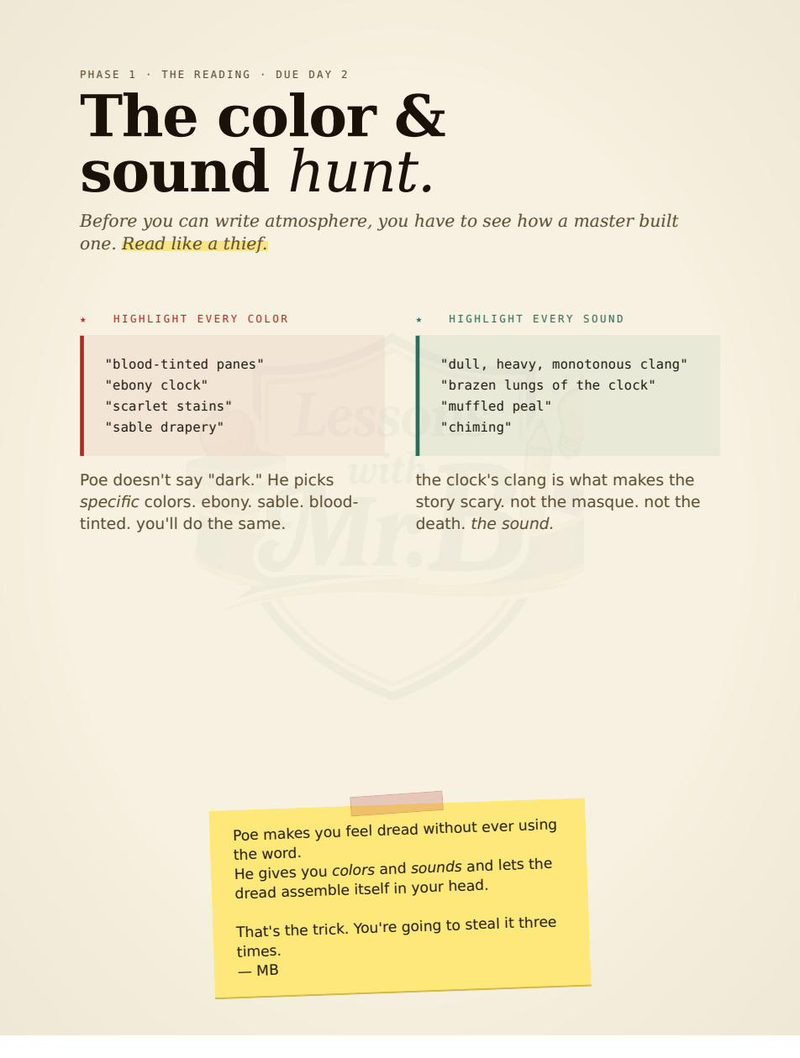
Three artifacts have been recovered and locked in the Vault of Restricted Items. The student is the chief archivist. Their job is to read Edgar Allan Poe's "Masque of the Red Death" first, steal his trick of building atmosphere through specific colors and sounds, then write three short catalog entries: one for each artifact, each in a different mood.
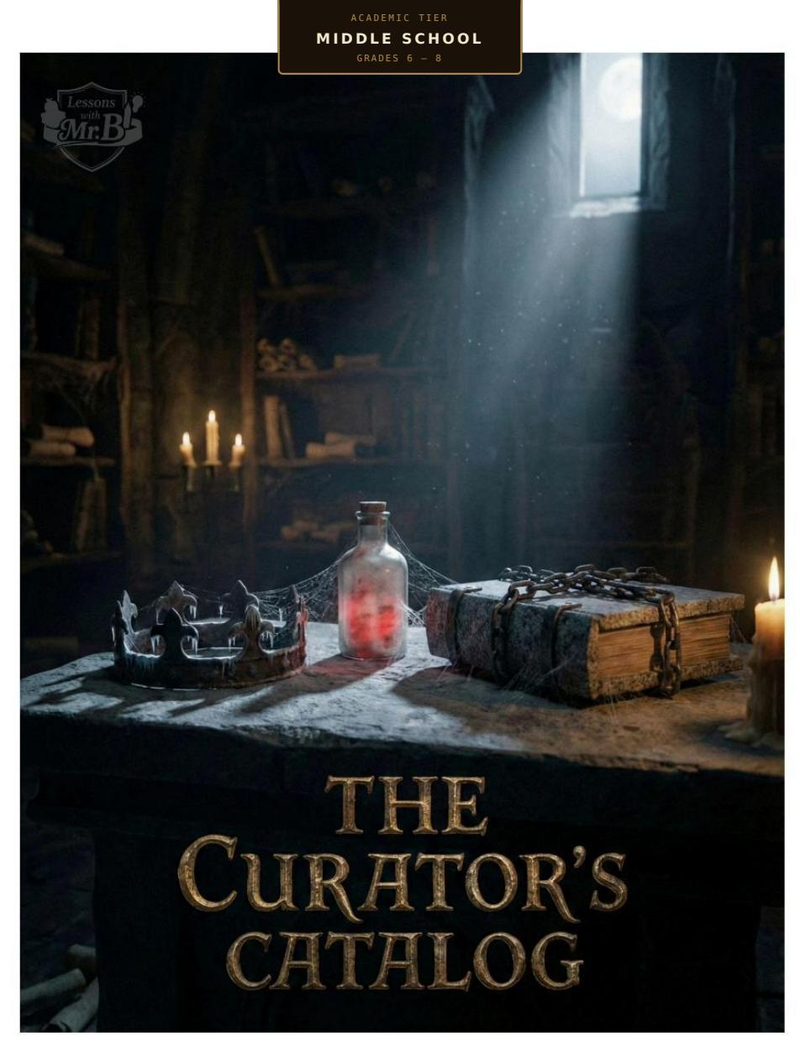
The student opens the kit and finds three artifacts laid out in front of them, each pulled from a different shelf and each demanding a different register entirely.
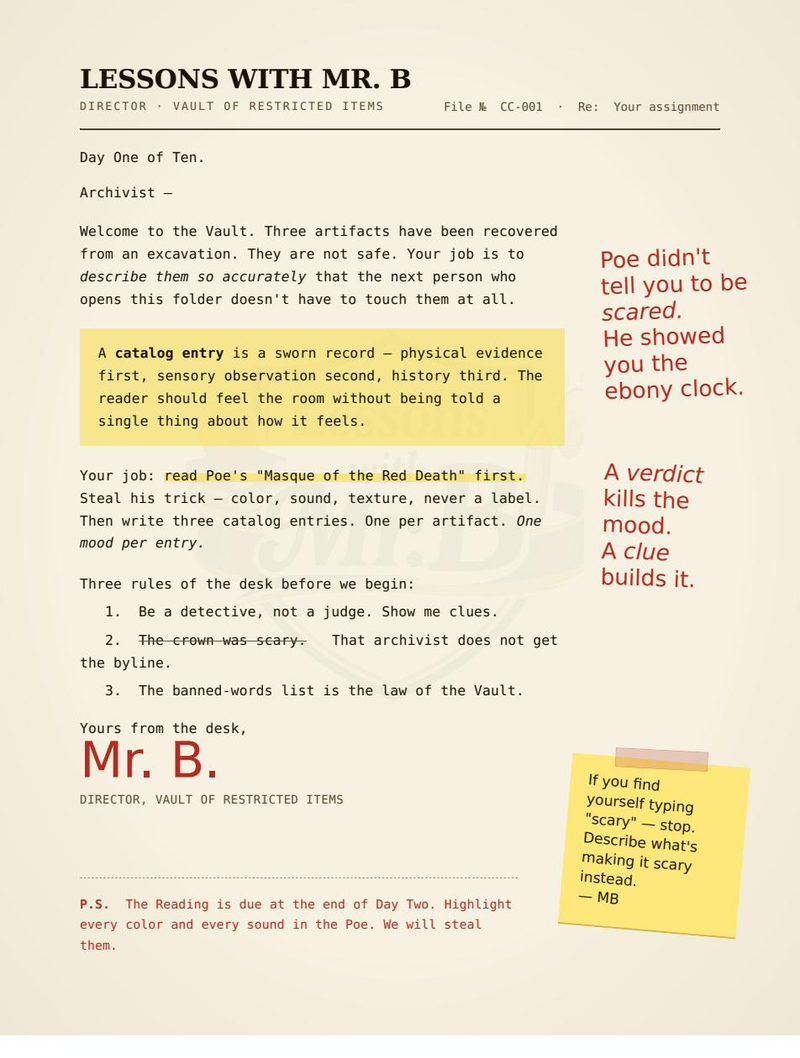
This isn't a research project. There's no Wikipedia answer. The catalog entry the student is asked to write isn't a list of facts. It's a mood, in prose. A reader should be able to close their eyes after the first line and know what room they're in.
For each of the three artifacts, the student writes 150 to 250 words in the tone the object asks for. Eerie. Tender. Triumphant. Whatever the object is doing, the writing has to deliver.
By the end, the student has written three short pieces in three measurably different registers. They haven't just described things. They've practiced one of the most useful skills any writer has: controlling the temperature of a paragraph on purpose.
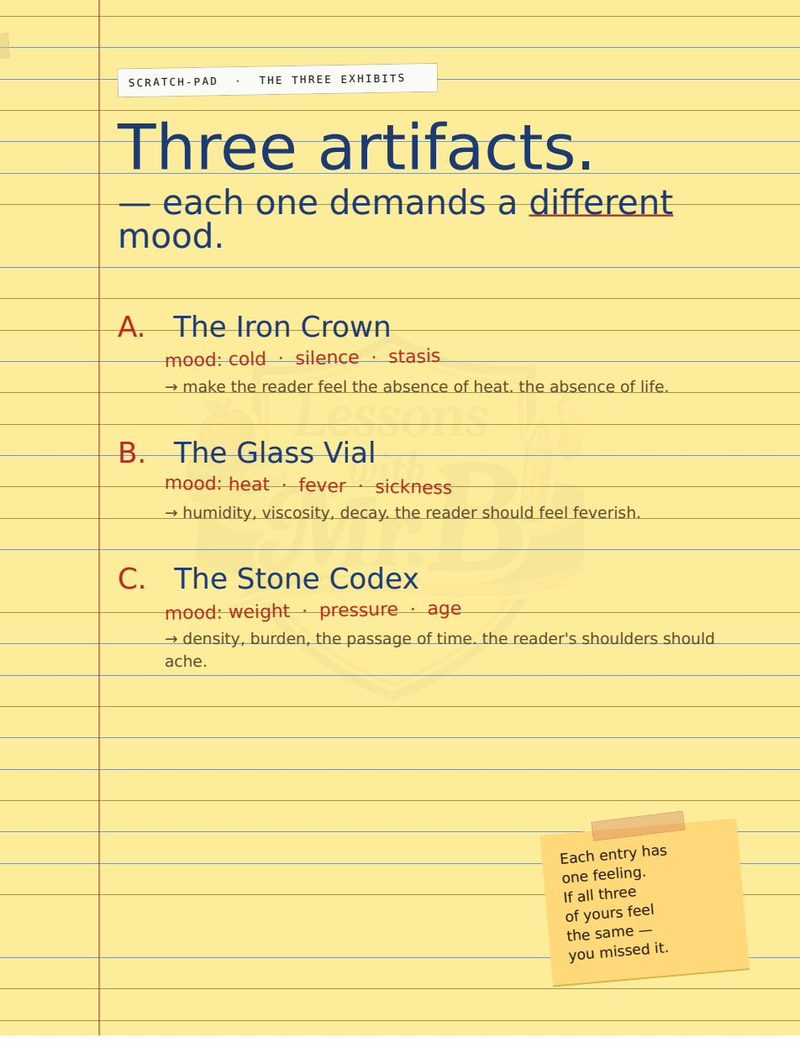
Three artifacts arrive in the vault. Each one needs its own catalog entry, and each entry has to produce a different feeling. Same student, same week, three measurably different registers on the page.
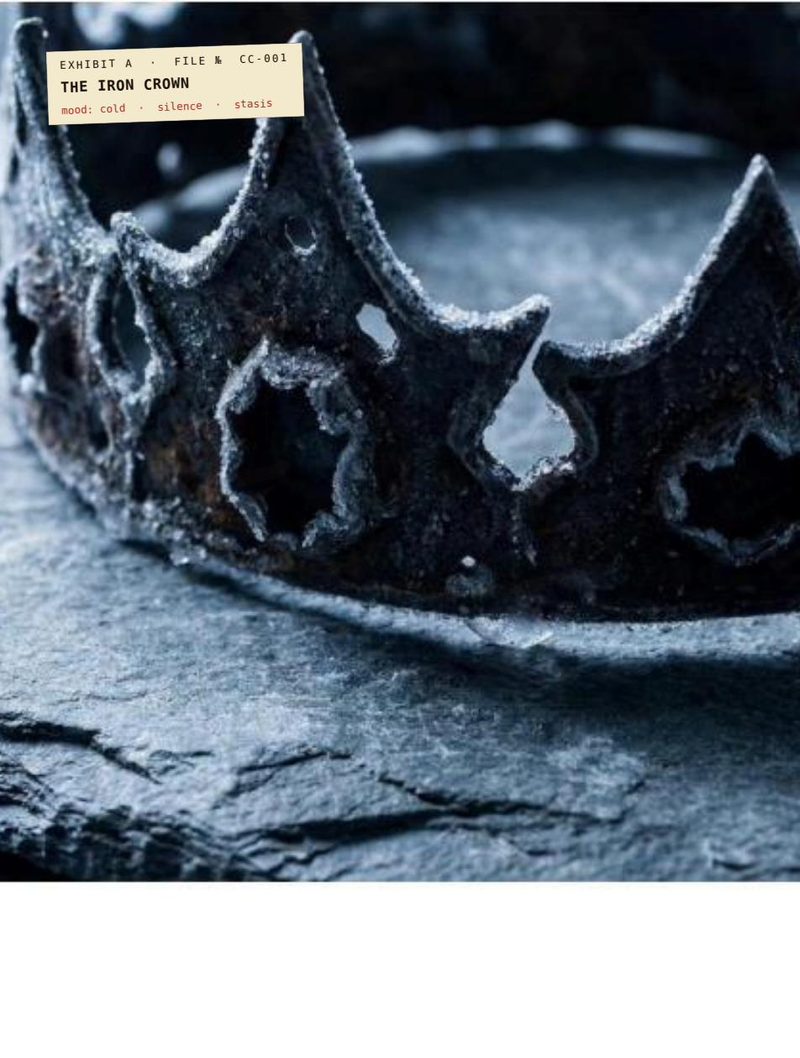
A frost-rimed iron crown on a stone slab. The student's job is to make the reader feel the absence of heat and the absence of life, without ever using the words "cold" or "dead."
A sealed glass vial with something the color of rust suspended inside. The reader should feel feverish reading it. Humidity, viscosity, decay, all built from specific sensory detail and active verbs.
A chained stone book, every page burdened. By the end of the entry, the reader's shoulders should ache. The student renders density and the slow press of time without naming either.
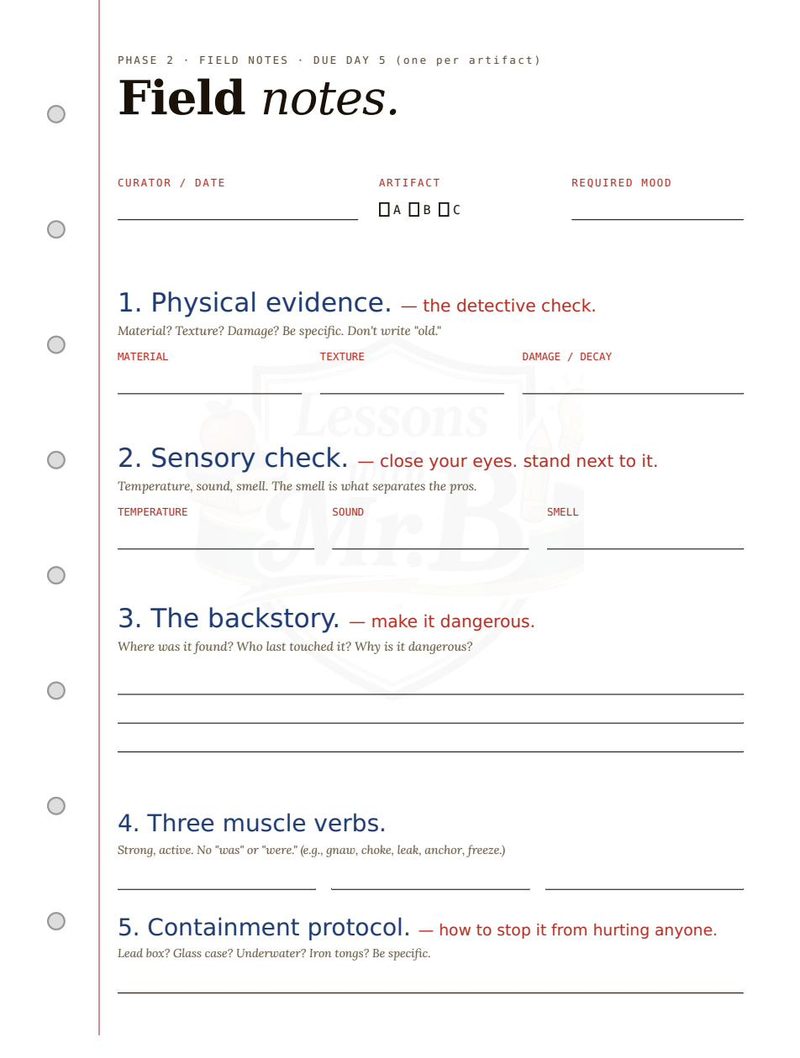
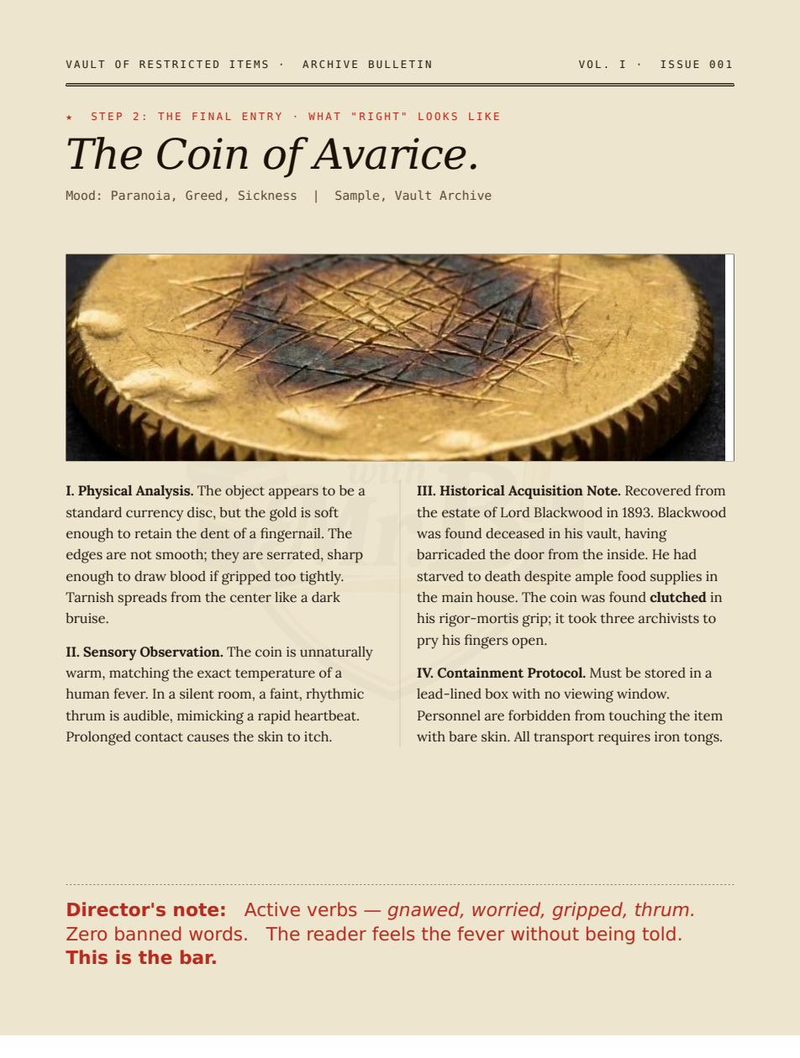
Twenty-eight pages run through the project end to end. The twelve below cover the cover, the welcome and B7 access policy, the instructor's brief, the assignment letter from Mr. B, the reading and field-notes worksheets, a Poe primary source, an exhibit photograph, the gold-standard model entry, and the back cover.
Cover, welcome with the B7 access policy, and the instructor brief. Five minutes here tells the parent and the student exactly what the next two weeks look like.
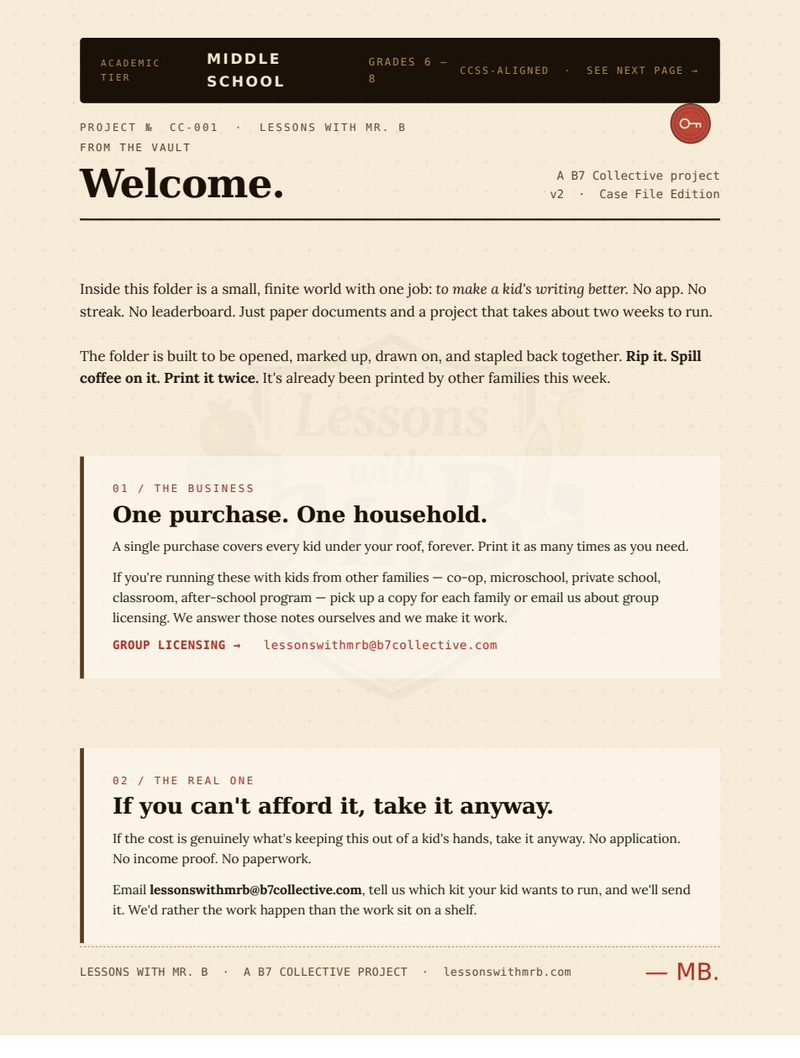
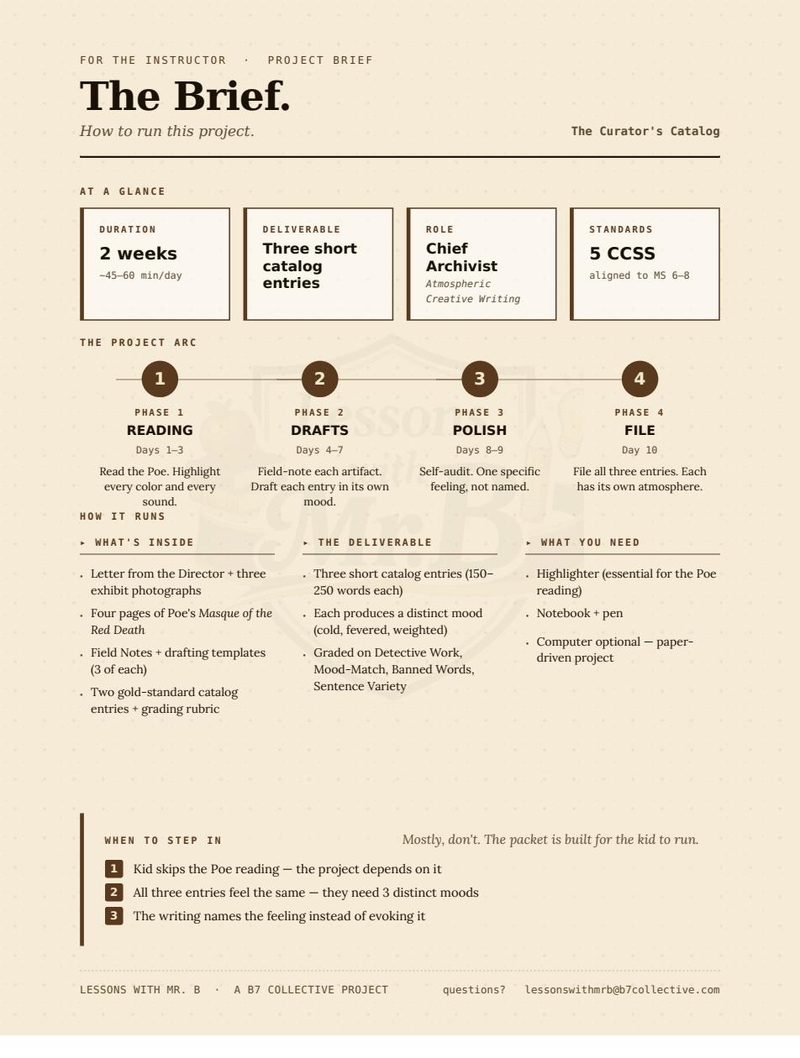
What's inside the kit, the letter from Mr. B that hands the student the assignment, and the scratch-pad that names the three artifacts and the mood each one demands.
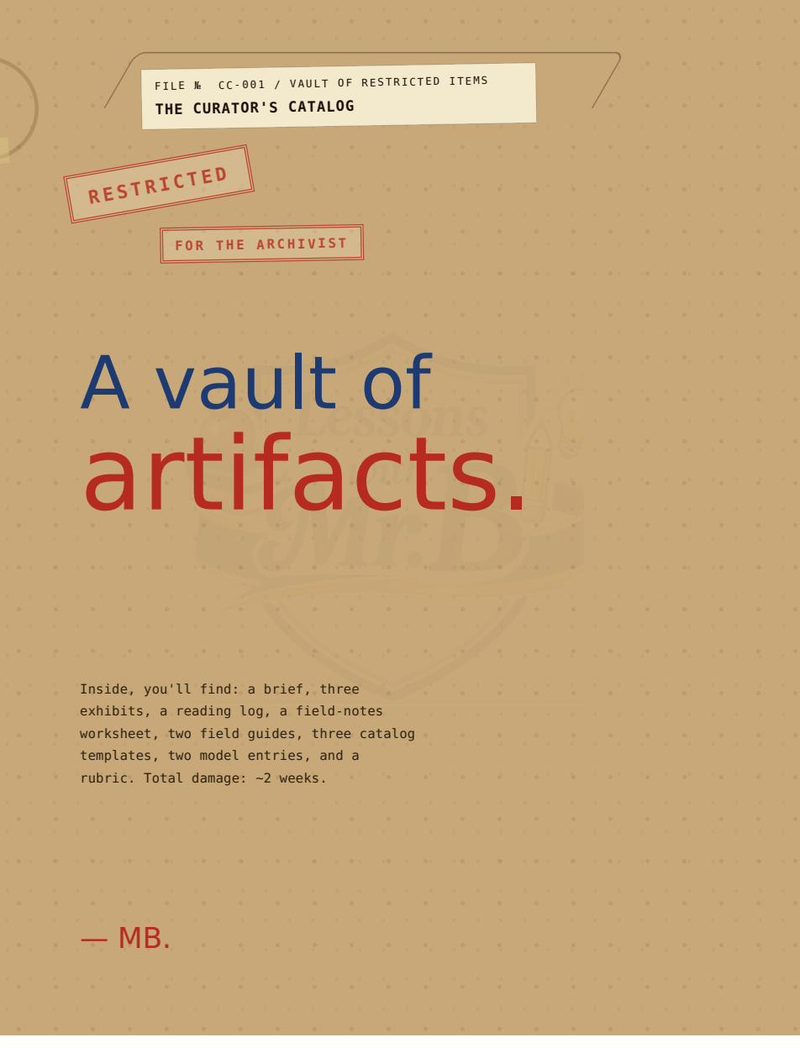
An exhibit photograph the student writes toward, the Phase 1 reading worksheet that teaches Poe's color-and-sound trick, and the actual primary text included in the kit.
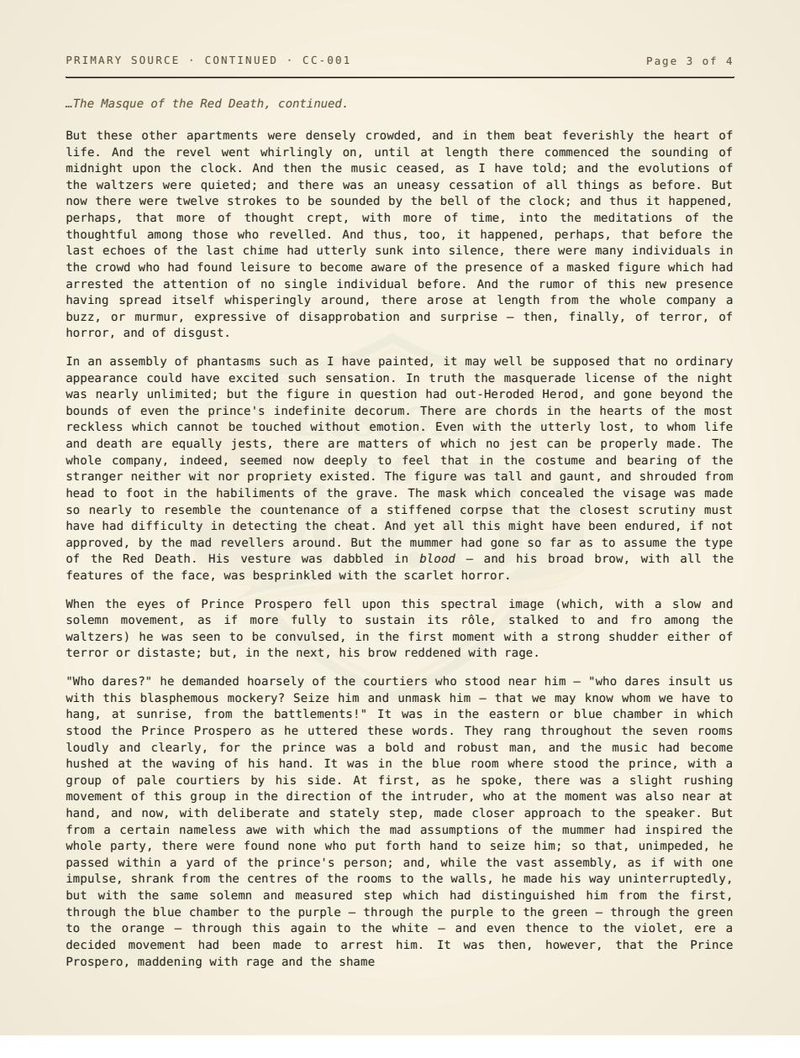
The structured field-notes worksheet the student fills in for each artifact, a polished gold-standard model entry that shows the bar, and the back cover.
The voice in this kit treats the student like a writer, because that's what they are. He doesn't tell the student to "be more descriptive." He shows them which word to swap and why. He steers them away from cliché. He asks for the senses. The standard is named on the page, so the student can write toward it themselves.
The result is descriptive writing as discipline, not decoration.
This kit hits CCSS narrative and descriptive writing standards for grades 6 to 8. The standards brief lives on Sheet 03 for the parent or instructor. The student never sees the codes.
$18, one purchase, every student under your roof, forever. The vault opens when the kit lands on the desk.
Get the Case File · $18