Six real issues. The student picks one they can argue (not just describe), gathers cited sources, then writes the strongest counter-argument to their own thesis and beats it on merit. The final piece is a 900 to 1500 word argument essay with a thesis, three or more body blocks, a counter-argument, and a conclusion.
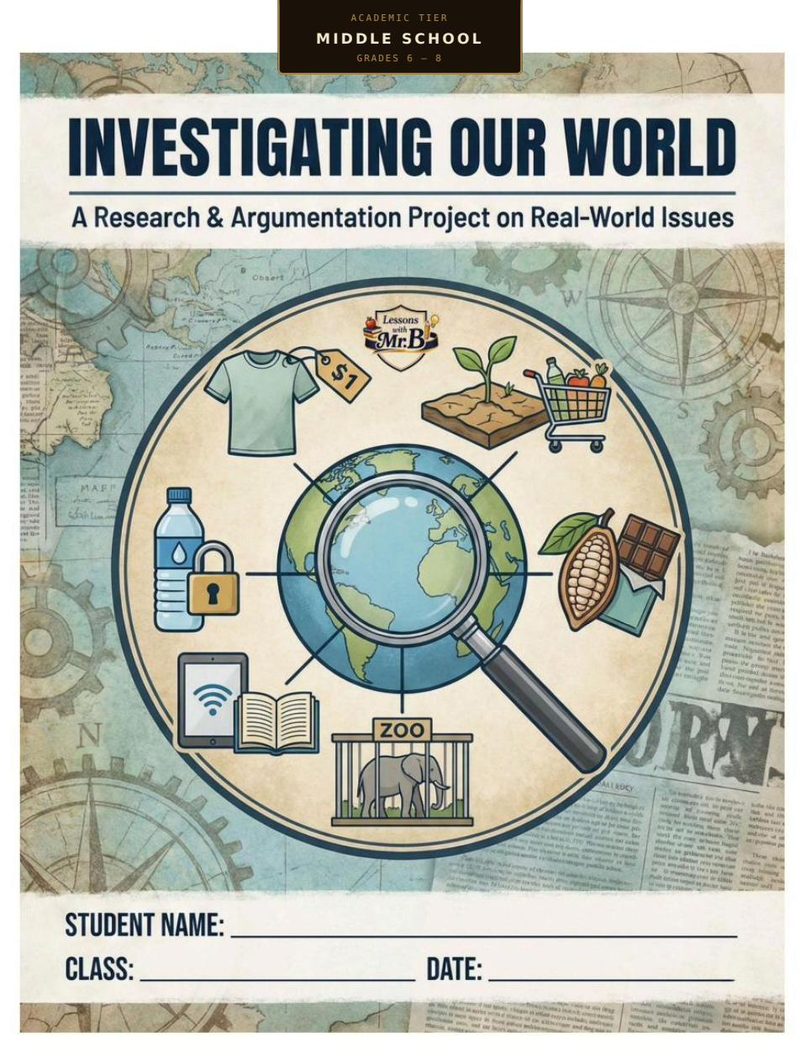
The student opens the kit and is told, in plain terms, what's being asked: pick an issue, build a case, and defend it on paper. Six issues are inside. The student picks the one they can argue, not just describe.
This is not a five-paragraph essay disguised as a research project. The investigator is asked to build a real argument with cited evidence, then to steel-man the strongest position against them, and then to answer it without flinching. The work is not in being right. The work is in being defensible.
By the time the kit closes, the student has done what working writers do for a living: made a claim, supported it with sources, taken the opposition seriously, and earned the conclusion.
Each issue is a doorway into the same skill set: research, structure, steel-man, defend. The student picks the issue that won't let them sleep. Mr. B holds the standard.
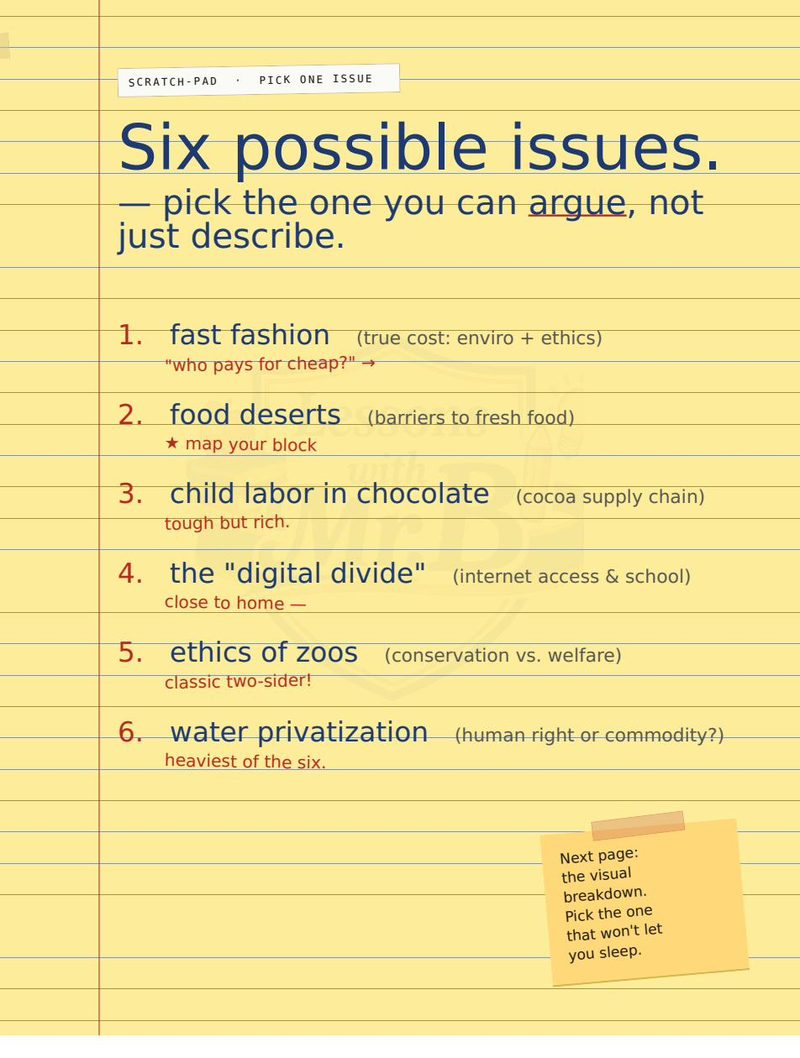
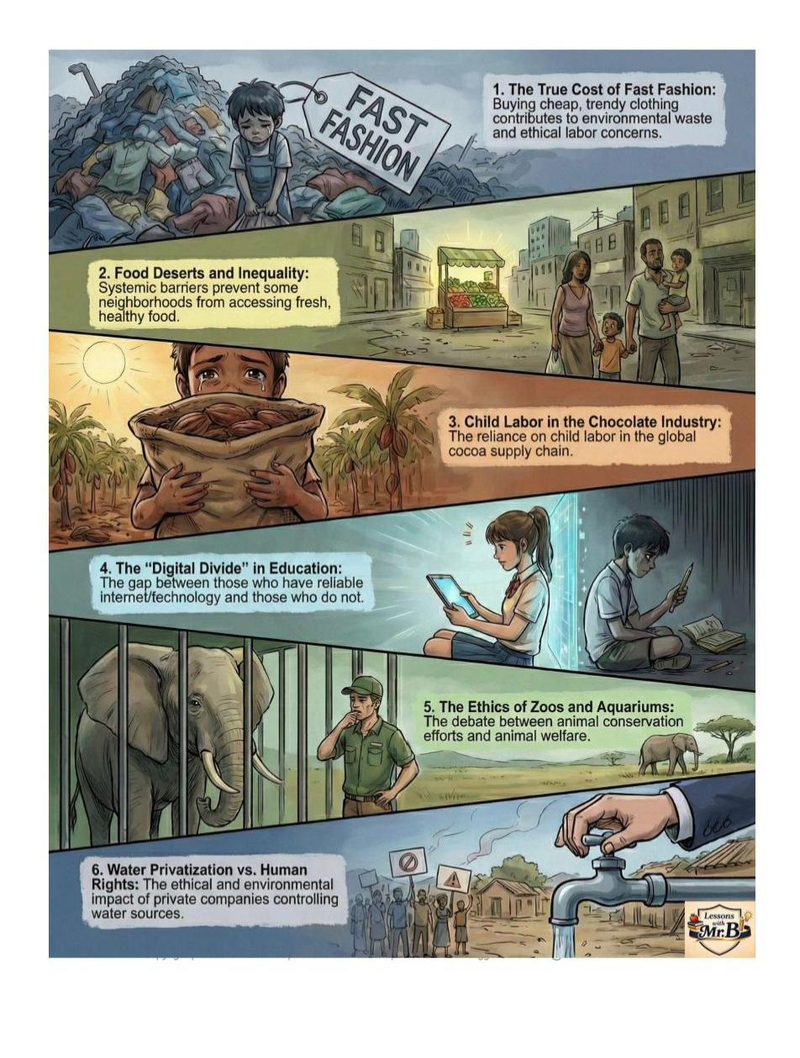
Forty cents a shirt. The full chain from cotton field to landfill. The investigator picks a side and proves it.
The map of who can buy a tomato within a mile of home, and what that map predicts. Build the case.
The supply chain behind the candy bar. The certification systems that work and the ones that don't.
Who has bandwidth, who doesn't, and what changes when "school" lives on the other side of an outage.
Conservation versus captivity. What the literature actually says. The investigator walks both sides.
Who owns the tap, and what happens when the answer changes. A live argument with real precedent.
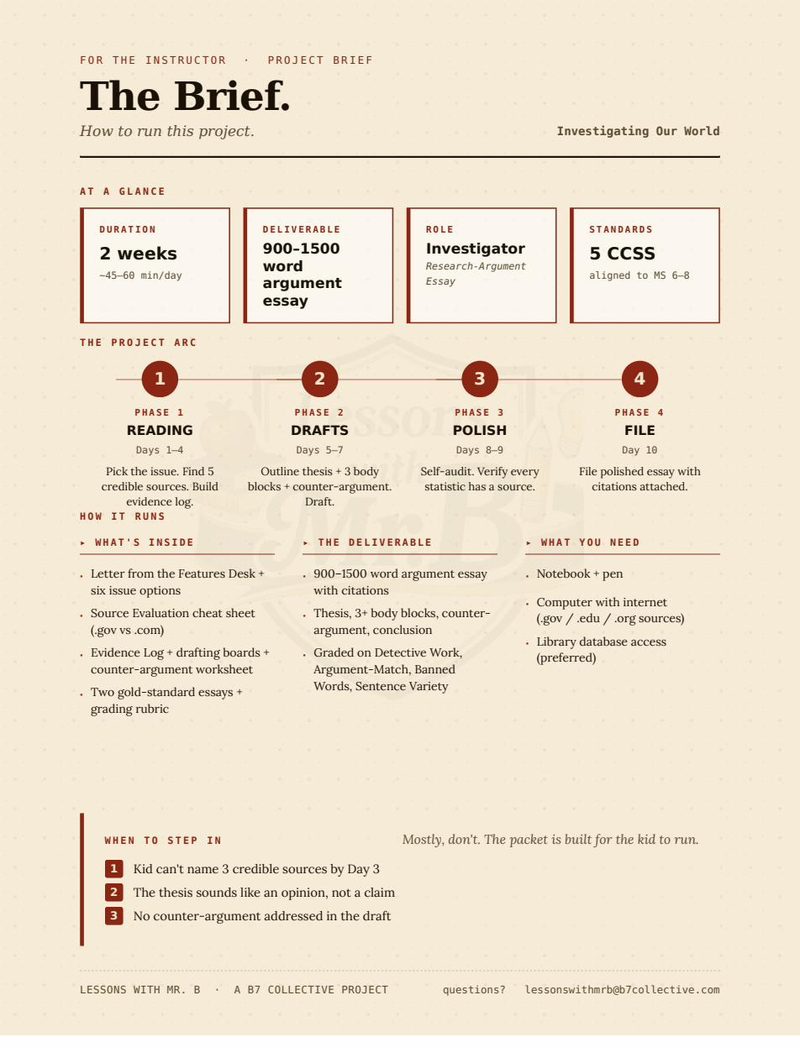
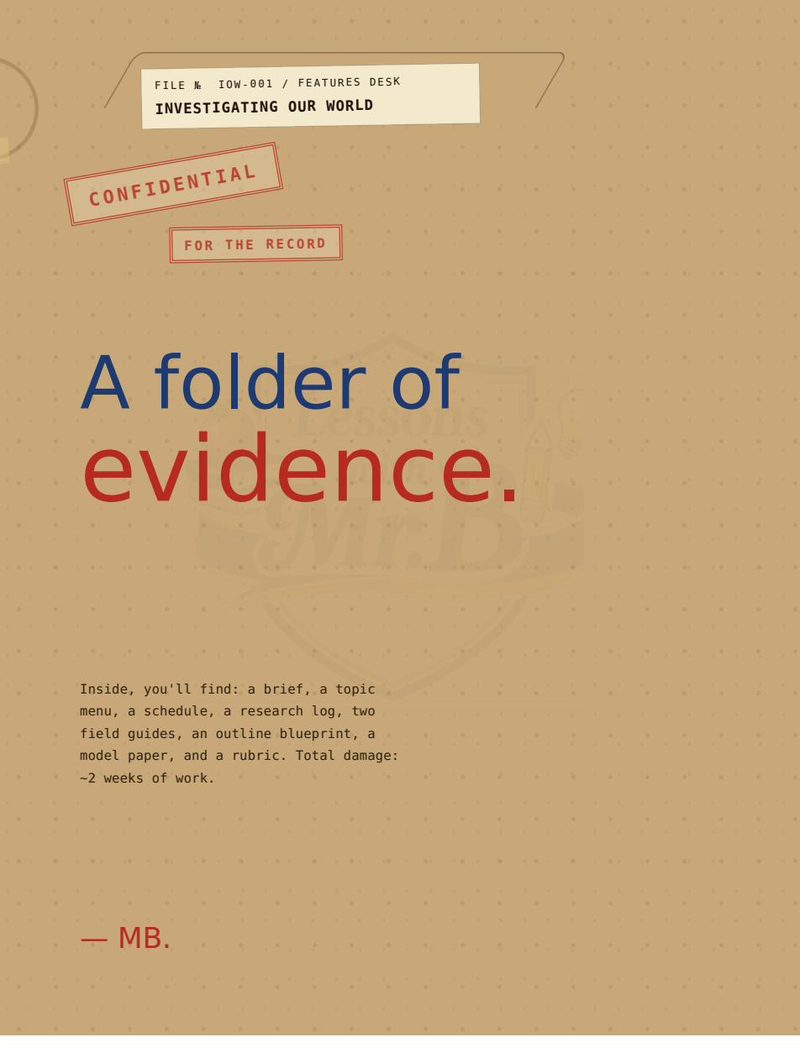
Twenty-four pages run through the project end to end. The twelve below cover the cover, the welcome with B7 access policy, the instructor brief, the kit inventory, the Day One letter from Mr. B, the six-issue menu, the visual breakdown infographic, the Evidence Log, the Essay Builder Blueprint, the outline drafting boards, and the back cover.
Five minutes of reading sets up the next two weeks. The student gets the role, the parent gets the standards, and the brief lays out the four phases.
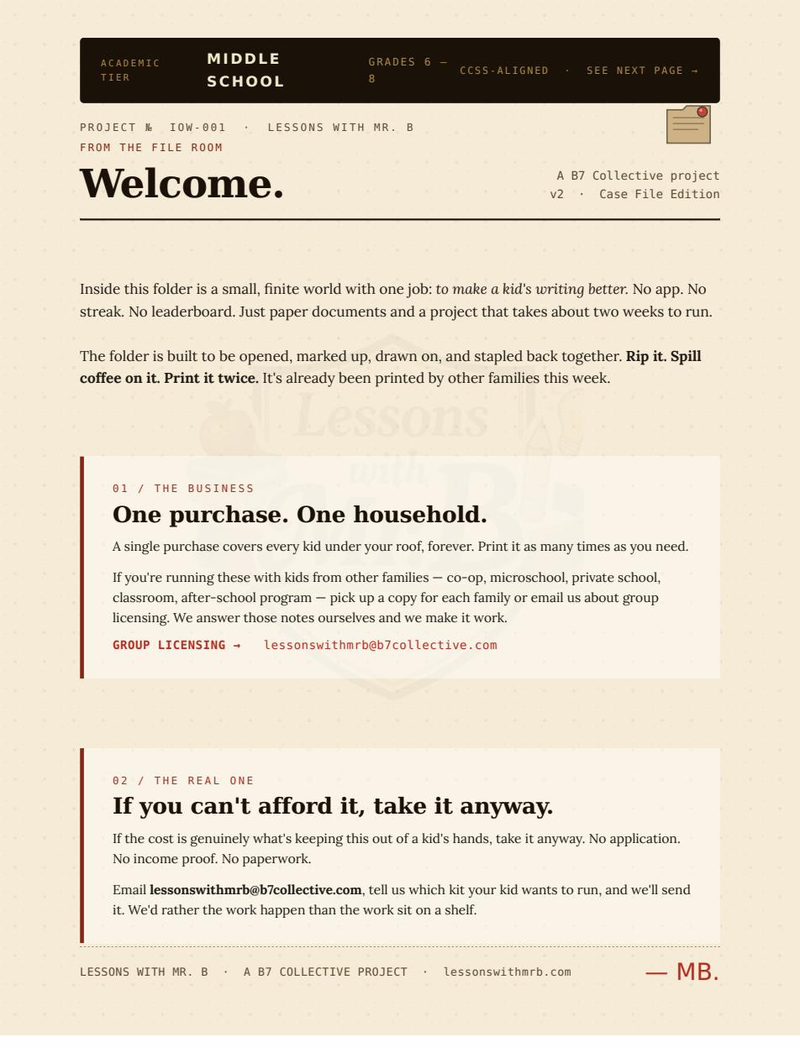
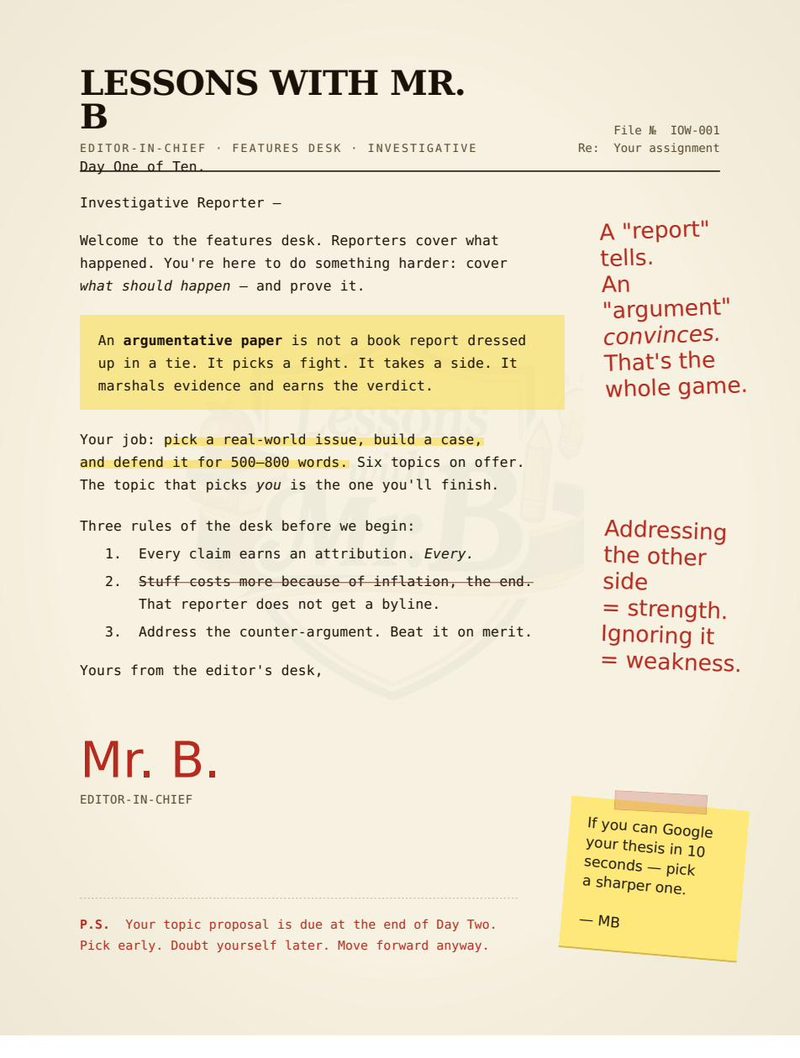
Mr. B hands the student the assignment as Editor-in-Chief of the Investigative Features Desk, then the yellow legal pad lays out the six possible issues to argue.
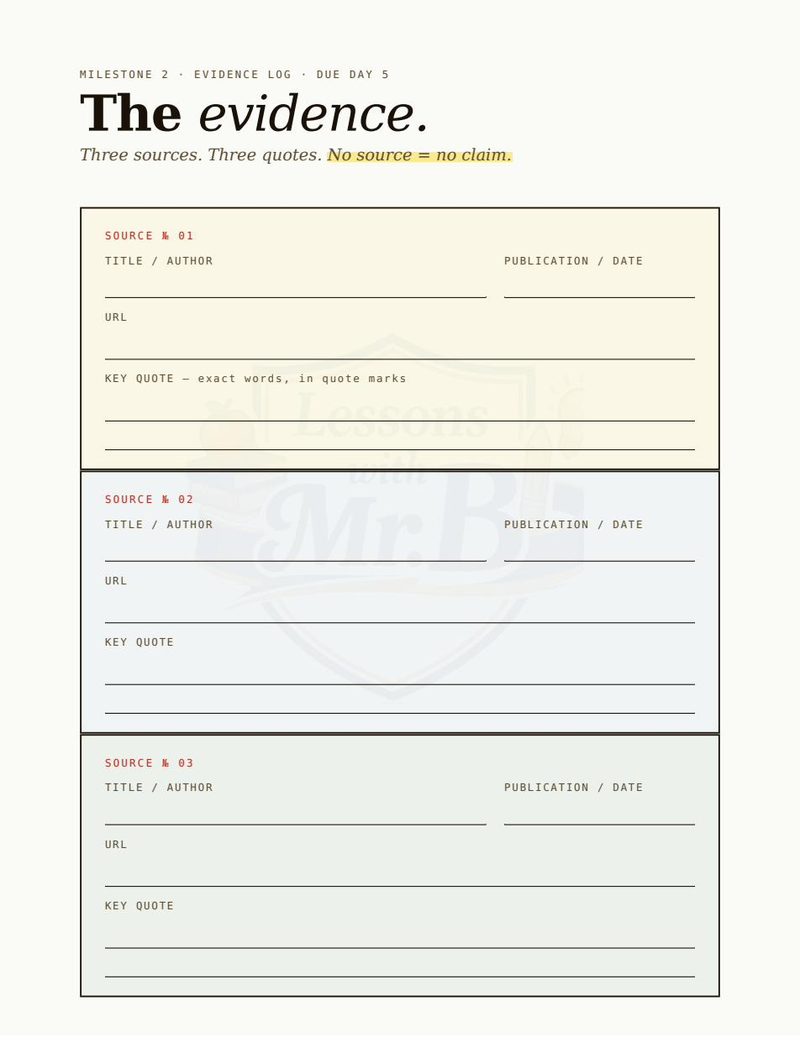
An illustrated breakdown of all six issues, a structured evidence log with three source slots, and the Essay Builder Blueprint that turns an argument into a buildable structure.
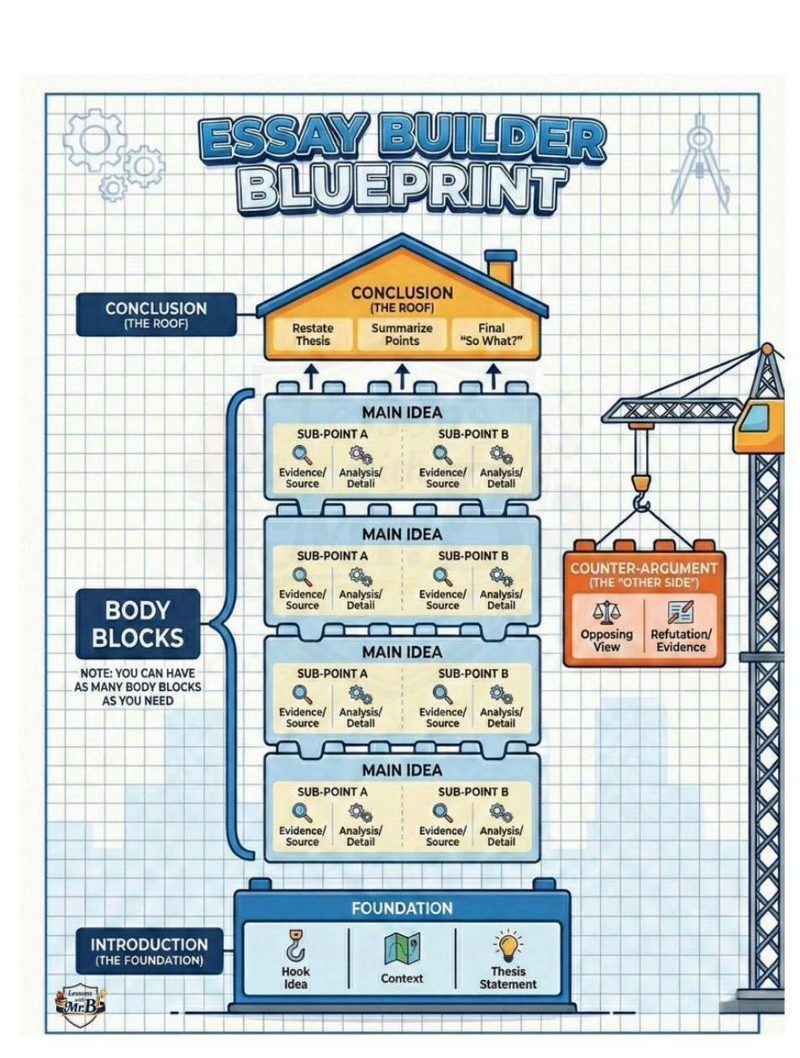
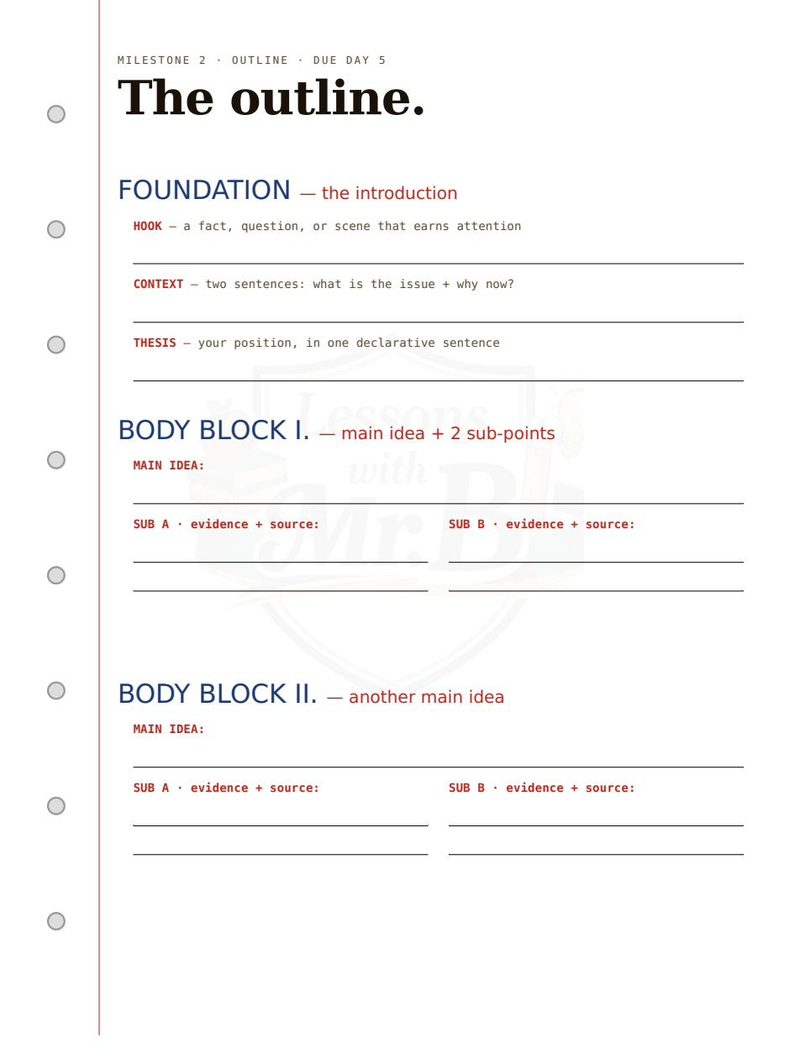
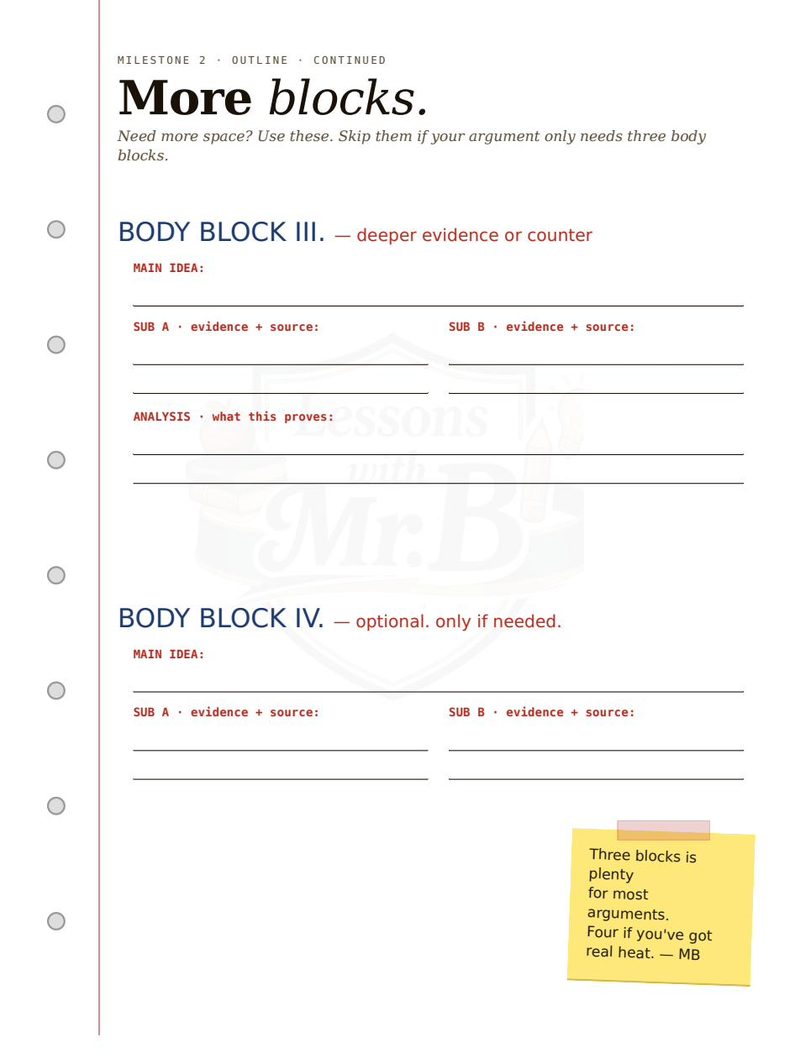
The structured outline pages where the essay is built block by block: foundation, three (or four) body blocks, then the close. The kit also includes the counter-argument worksheet and gold-standard essays not pictured.
The voice in this kit treats the student like an investigator because that's what they're being asked to be. It shows why active verbs work harder than passive ones. It asks for the year, the source, the specific. It models the attention an investigator brings, so the student starts bringing it themselves.
Mr. B bans "in conclusion." He bans "obviously." He thinks the student can build a case that holds. He's right.
This kit hits CCSS argument writing standards for grades 6 to 8. The standards brief on Sheet 03 spells it out for the parent or instructor. The student never sees the codes. They see the work.
One folder. One household. Forever. Eighteen dollars puts a real investigation on the kitchen table.
Get the Case File · $18