Lessons with Mr. B logo Lessons with Mr. B. Get this Case File
Bureau of Lessons with Mr. B Drawing No. BFH·001 / 24 pages Filed: Architectural Records
Home  /  Projects  /  The Blueprint of Hope
Drawing No. BFH·001

The Blueprint of Hope.

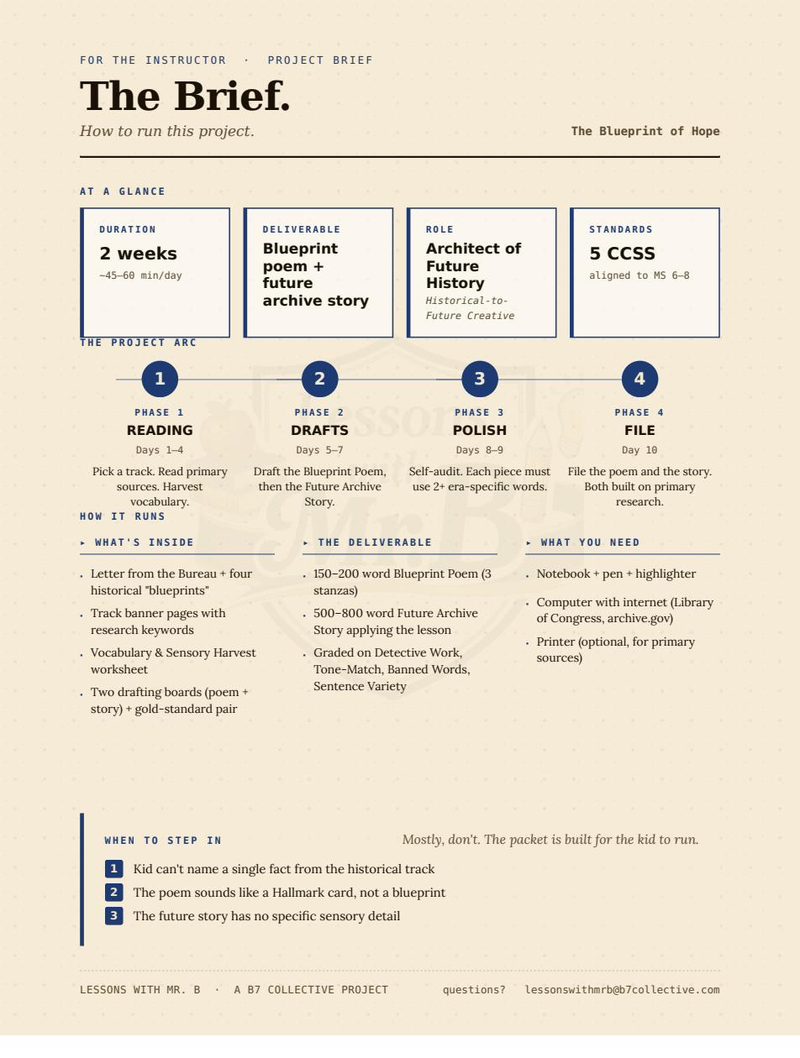
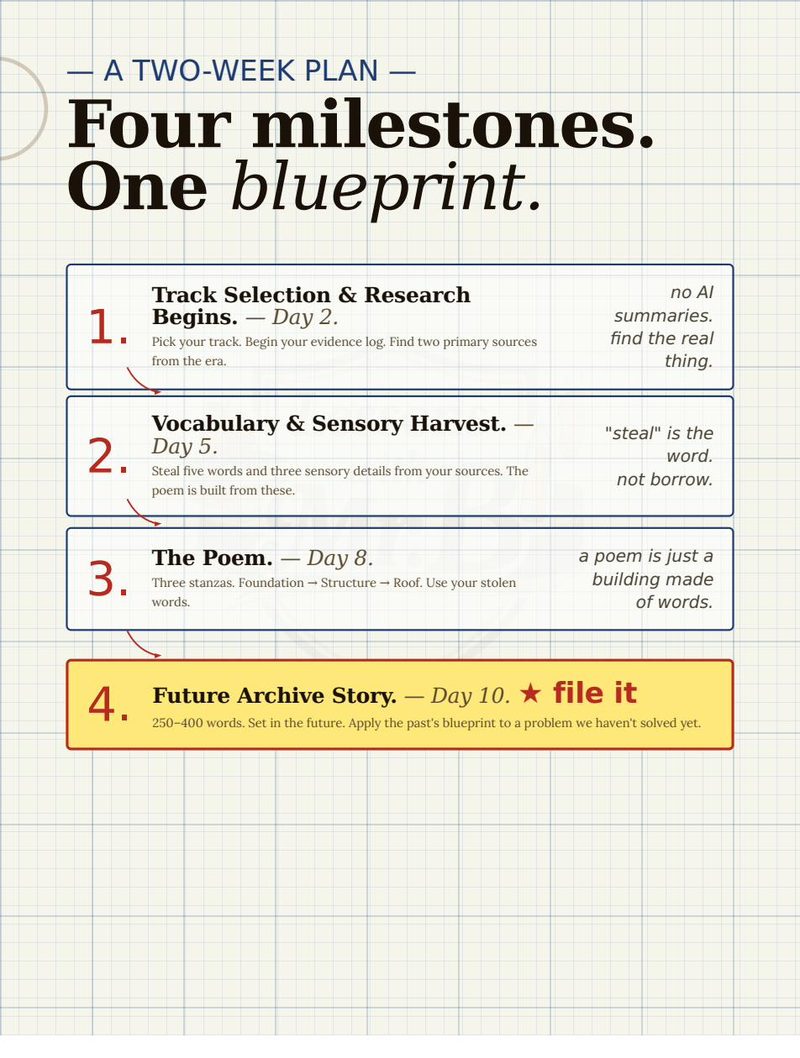
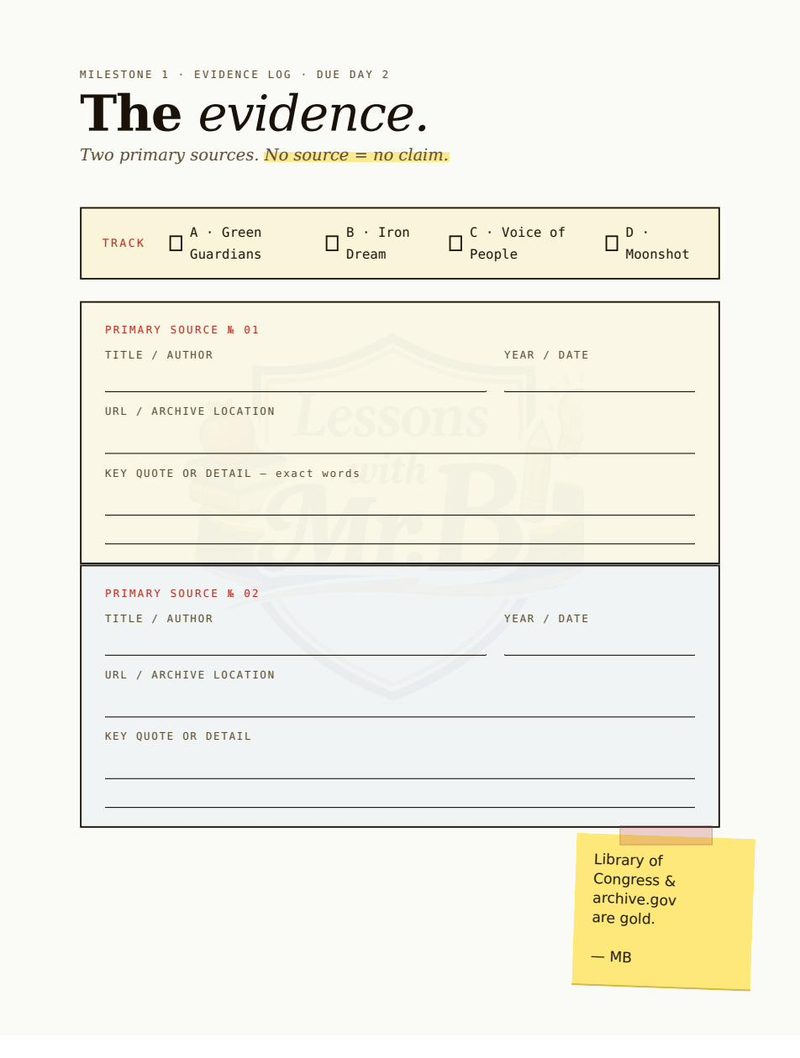
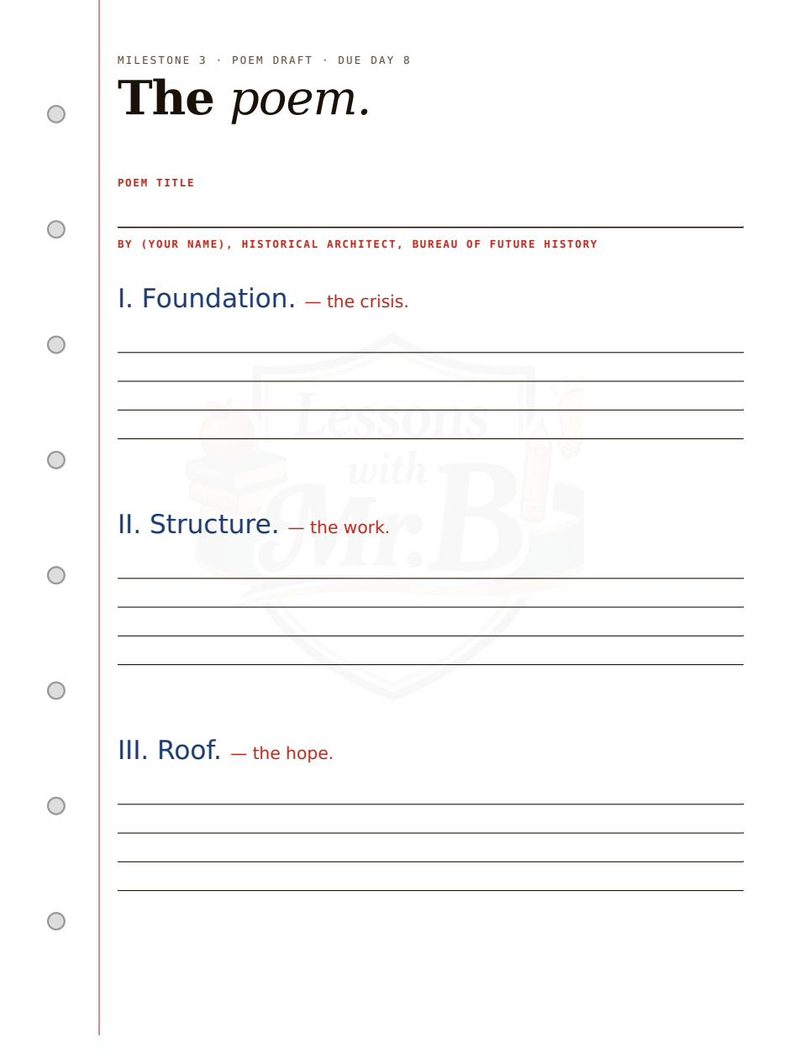
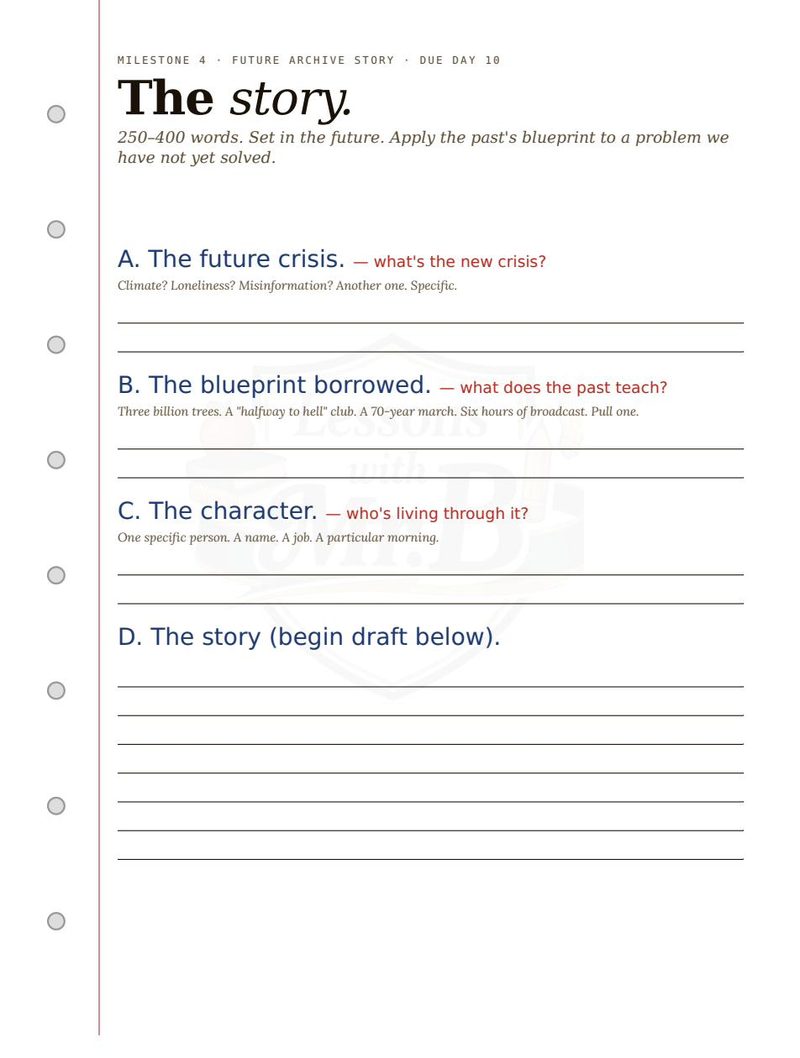
The student picks one of four historical tracks where Americans hit a crisis and built something better. Then they steal language from primary sources, write a three-stanza Blueprint Poem, and write a Future Archive Story applying the same lesson to a problem we still haven't solved.

Final Bar
Blueprint + Story
Range
650 to 1000 wd
Pages
24
$18 One-time. Yours forever. Get the Case File Look inside
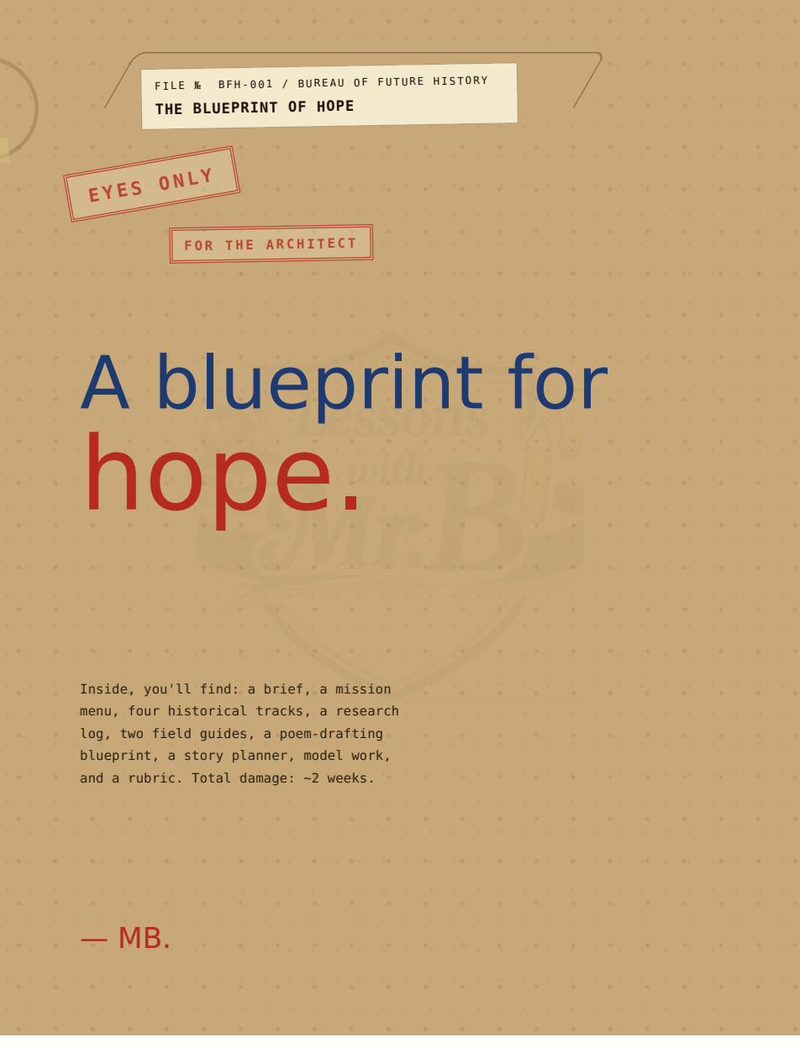
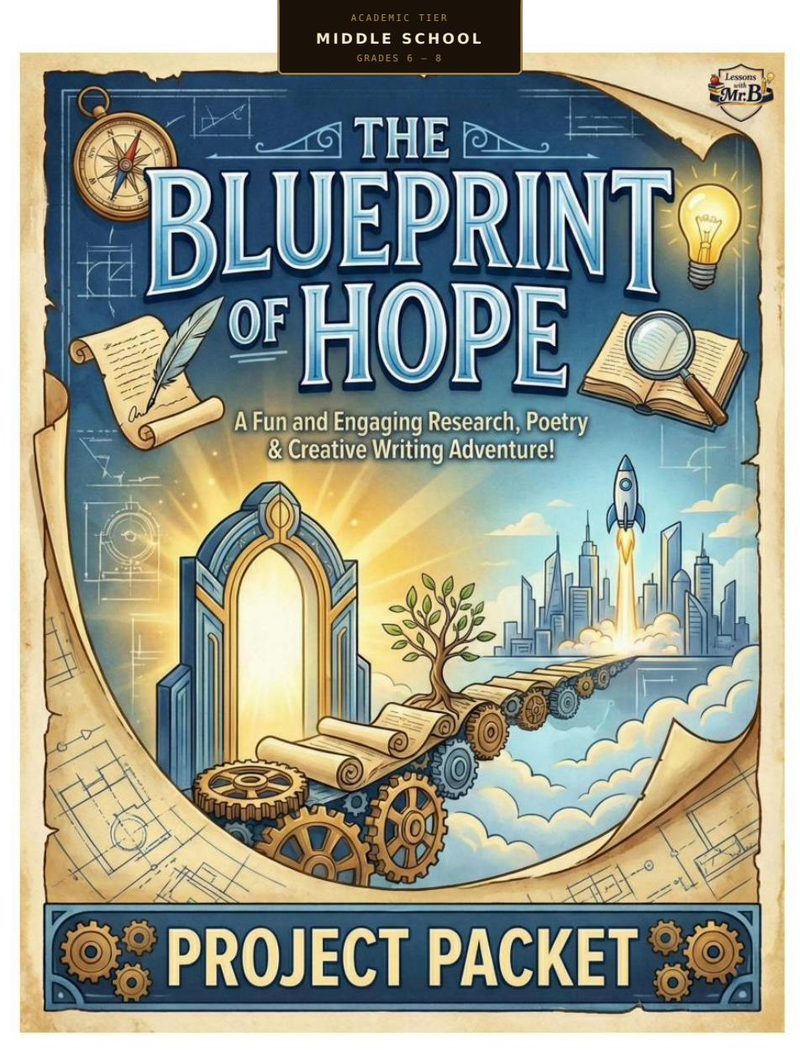
The Blueprint of Hope folder cover, blueprint blue with technical drawing motifs and brass accents Sheet 01 / Cover
Quick reference
Grades6 to 8
Length650 to 1000 words
Time~2 weeks
Pages24
Standards5 CCSS, MS 6 to 8
FormatPrint-ready PDF
Pencil T-Square Compass Vellum Eraser Patience

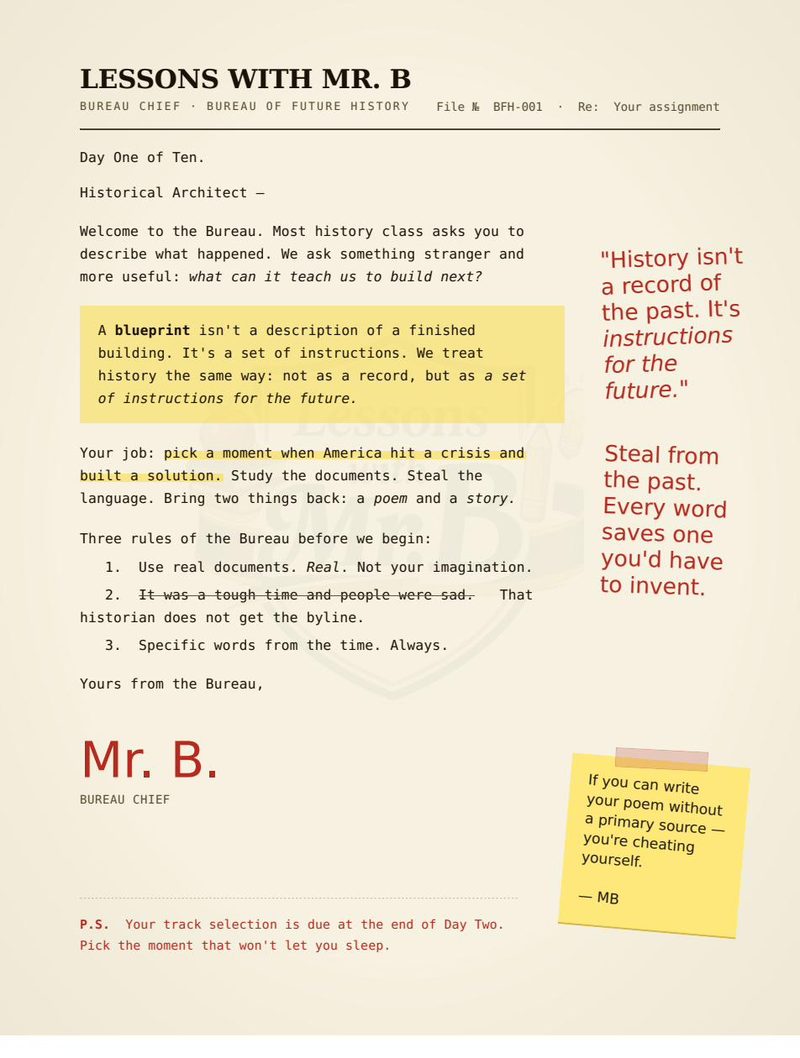
Every future that ever arrived was somebody's blueprint first. The interstate was a drawing. The vaccine was a paper. The right to vote was a sentence on a sheet that didn't yet have a country willing to sign it. Hope, as it turns out, leaves a paper trail.

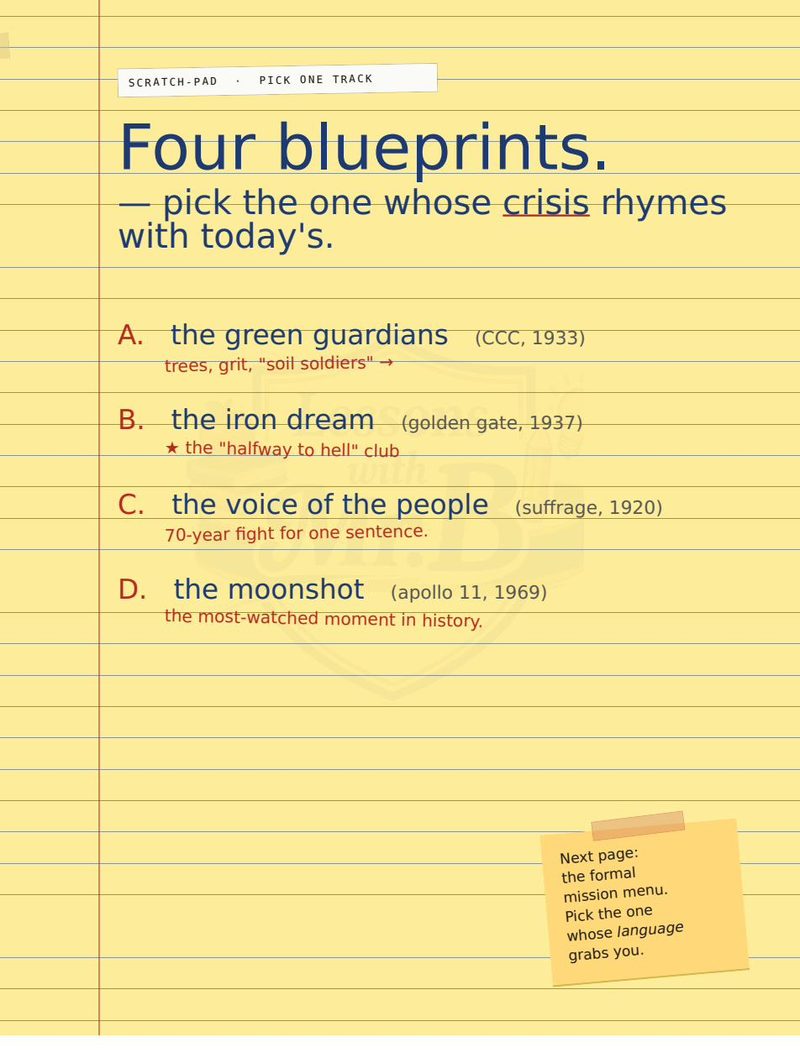
This kit gives the student four of those trails. Real ones: public works built in 1933 by an army of unemployed young men sent to plant three billion trees; the Golden Gate Bridge raised in 1937 by engineers and the men of the "halfway to hell" club who fell into the safety nets and survived; a constitutional amendment drafted across decades by women told they were asking for too much; a moon landing in 1969 announced before anyone alive knew how to do it.

The student picks one. They study what was drawn, what was built, what was lost in the building, and what the world quietly inherited. Then, on the back of that study, they draft the next one: a blueprint poem and a future archive story. Two pieces of writing that, if the world is patient, might come true.
"Notes first. Commitments second. We do not draft what we cannot defend, and we do not promise what you have not measured. The future is not a feeling. It is a specification."
Mr. B.
Section II / Choose your track

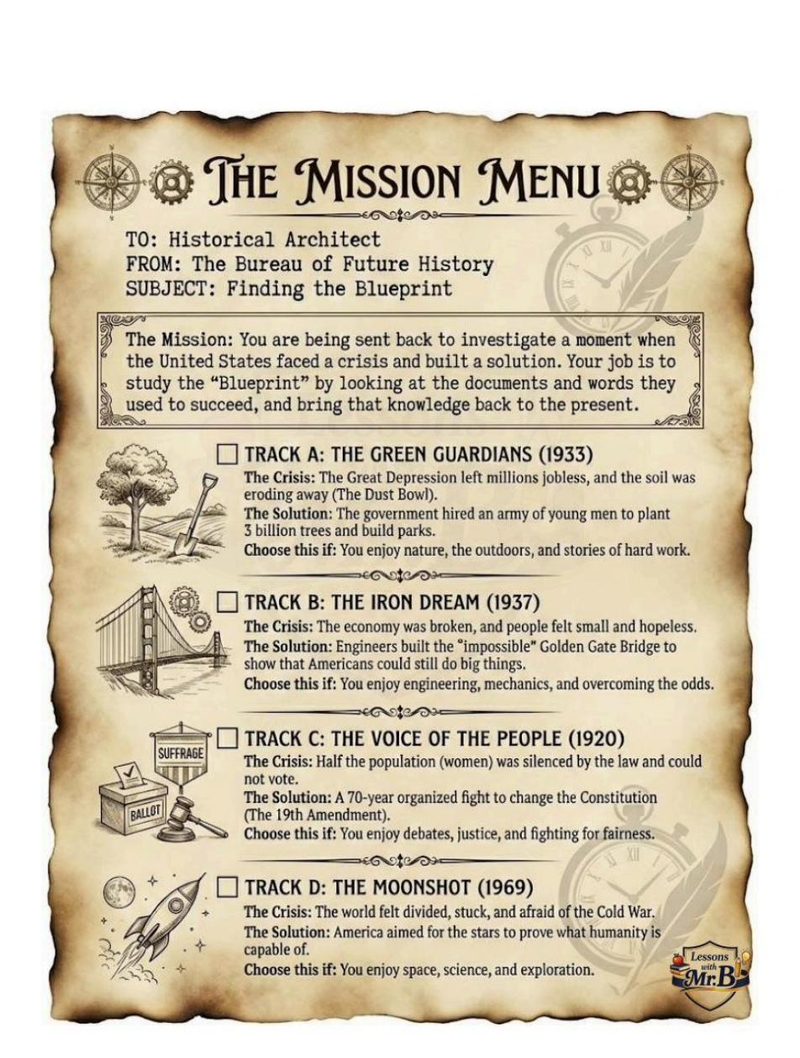
Four moments when somebody drew the future and the future showed up.

Each track is a real human ambition, paired with the documents the student will study. Pick one. Or let the student pick. Either way, this is where the work begins.

Track A
1933

The Green Guardians.

The Civilian Conservation Corps put three million people to work planting forests, building trails, and quite literally rebuilding the soil under a country that had run out of hope. The student studies what they planted, what it cost, who got included, and who got left out.

Skill: Argument from precedent  ·  Civic infrastructure
Track B
1937

The Iron Dream.

The Great Depression had broken the country's confidence. Engineers built the "impossible" Golden Gate Bridge anyway, and the men who fell into the safety net and survived formed the "Halfway to Hell" club. The student studies how a country that felt small chose to attempt something enormous.

Skill: Engineering under pressure  ·  Technical narrative
Track C
1920

The Voice of the People.

The 19th Amendment was drafted, redrafted, ignored, ratified, and finally signed across seventy-two years of women refusing to leave the room. The student studies the patience the document required and the version of "we" the country was finally willing to accept.

Skill: Document analysis  ·  Civic patience
Track D
1969

The Moonshot.

President Kennedy announced the moon landing eight years before anyone alive knew how to land on the moon. Four hundred thousand people quietly figured it out. The student studies what gets unlocked when an entire country agrees on a single, public deadline.

Skill: Goal-setting at scale  ·  Coordinated execution
Section IV / The role

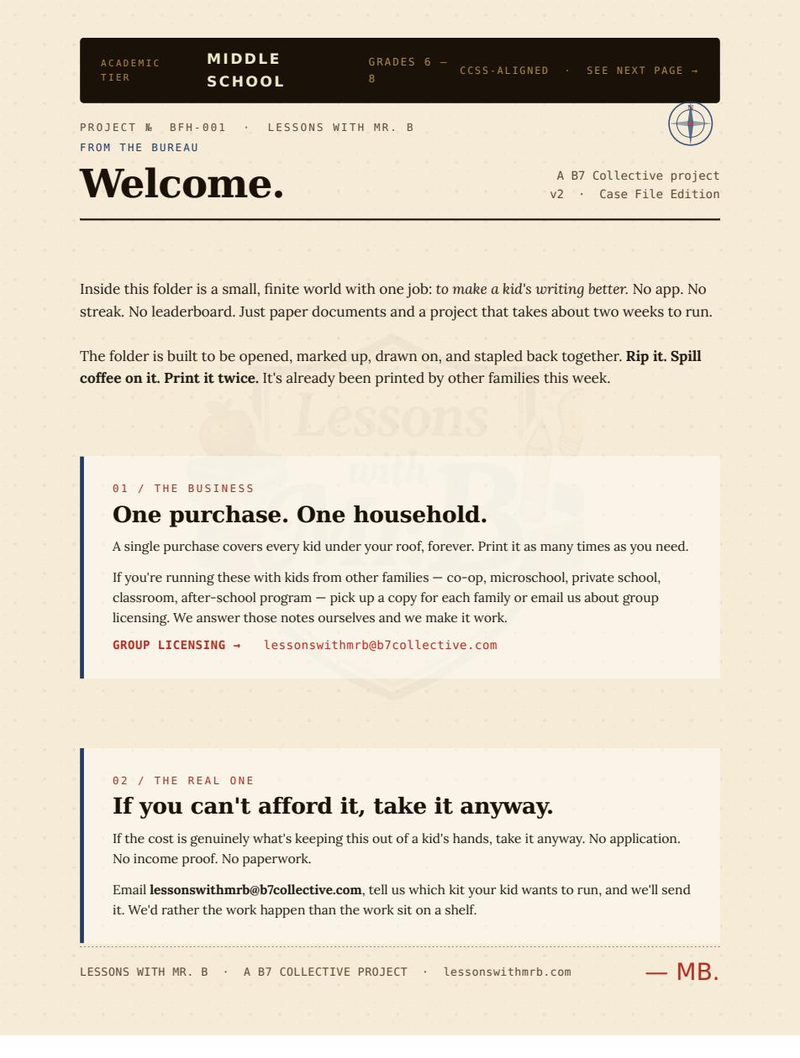
The student is an architect of future history.

Not a student writing about history. Not a fan of the future. An architect. A working draftsperson. Their job is to study what one generation drew, name what it got right, name what it cost, and then commit a draft of their own to paper.

The kit gives them a desk, a brief, a deadline, and Mr. B as their guide on the page. The included rubric is what the parent or instructor uses to grade. The standard, written into the kit, asks for writing that is measured, defended, and signed.

Other folders on the desk.

One kit. Twenty-four pages. Yours forever.

Buy the Blueprint of Hope.

$18. One purchase covers every student under your roof, forever. If the cost is the only thing in the way, ask anyway. I send.